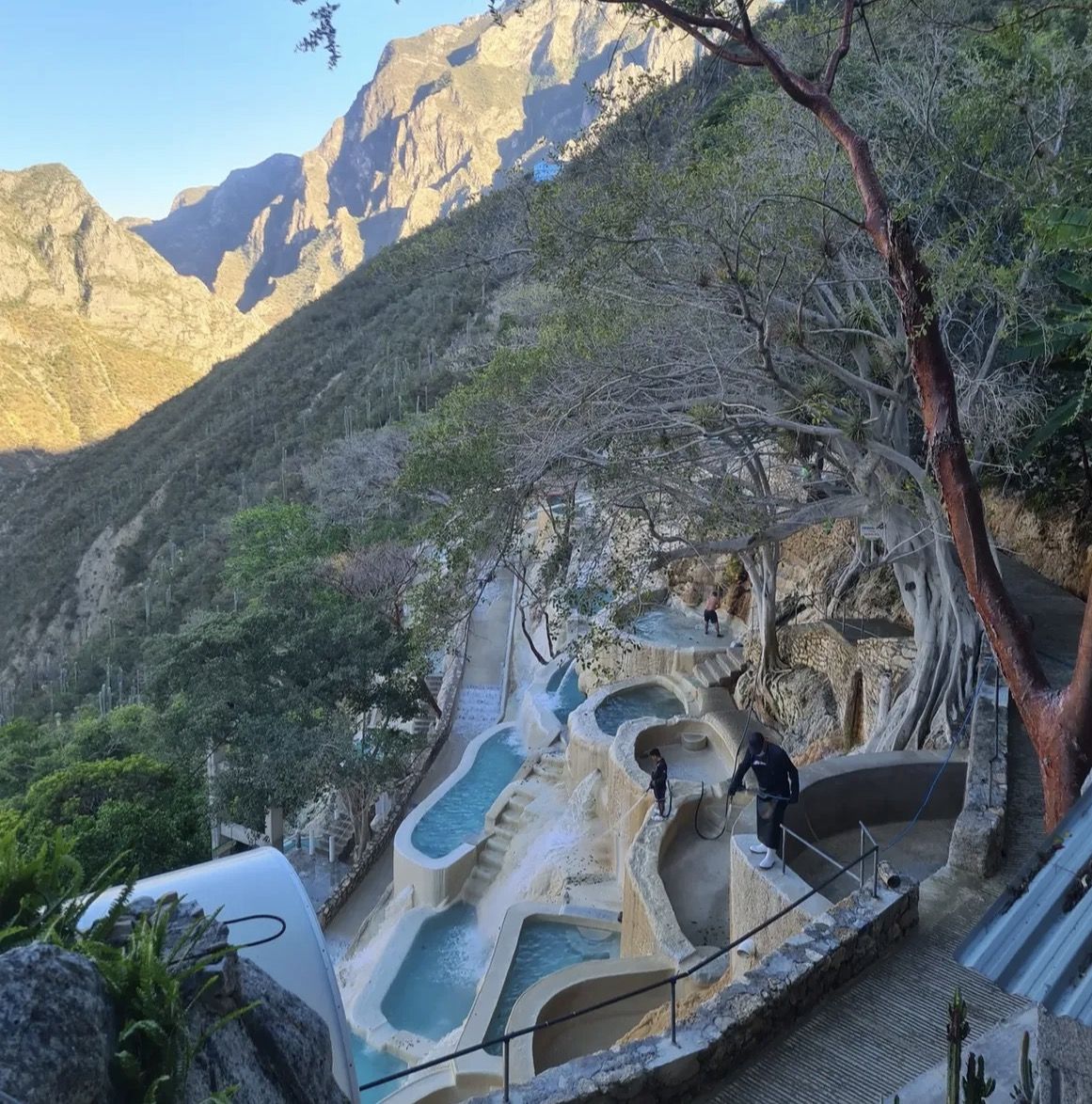
In shortThe nearest thermal bathing to Mexico City is Xhandos Ajacuba, about 1 h 30 min out, with pools averaging 36 °C; Ixtapan de la Sal is 116 km and roughly 1 h 45 min, Las Estacas about two hours. Grutas Tolantongo is the furthest at 201 km and about 3 h 50 min each way, and the only one with roughly 40 thermal pools built on a cliff face plus a warm river.
201 kmMexico City to Tolantongo
3 h 50 mindrive each way
about 40cliff terrace pools
36–38 °Ccave and terrace pools
Hot springs near Mexico City, sorted by driving time
Warm water is within reach of the capital in ninety minutes. The thermal site people organise a whole trip around is nearly four hours out. Most of the choice comes down to what you accept in between: a tiled balneario with slides and a wave pool close to home, or a canyon floor at 1,280 metres with pools built one above another on the rock.
The table sets the main options side by side using each operator's published figures. Smaller balnearios change prices and hours without much notice, so confirm on the day you travel.
| Place | Getting there | Water temperature | Admission | What the bathing is like |
|---|
| Grutas Tolantongo, Hidalgo | 201 km from Mexico City, about 3 h 50 min | 36–38 °C in cave and terrace pools; river given as 34–36 °C on the park's English page and 36–38 °C on its Spanish one | MXN 230 per person per day, cash | About 40 pools stacked on a cliff face, a grotto, a thermal river, canyon walls up to 500 m |
|---|
| La Gloria Tolantongo, Hidalgo | 3 h 20 min from Mexico City on its own site | Water emerges at 38 °C | MXN 180 adults, MXN 150 arriving on foot via the Puente de Tolantongo | Family thermal pools, a thermal river, the Cola de Caballo and a waterfall dropping more than 30 m; access 7:00–19:00 |
|---|
| Xhandos Ajacuba, Hidalgo | About 1 h 30 min from Mexico City, about 1 h from Pachuca | Pools average 36 °C | MXN 140 general, MXN 100 children 3–11, MXN 80 with INAPAM | Thermal pools, the closest proper soak to the capital |
|---|
| Ixtapan de la Sal, Estado de México | 116 km, about 1 h 45 min | Not published by the operators | Parque Acuático Ixtapan MXN 320 adults / MXN 200 children; municipal 'El Bañito' MXN 95 | A large water park open 8:00–17:30, or the municipal thermal baths 6:00–17:00 |
|---|
| Las Estacas, Tlaltizapán, Morelos | About two hours | No figure published for the river | MXN 550 adults, MXN 350 children under 1.25 m, under 90 cm free | Swimming in a spring river rather than hot bathing; 8:00–18:00 |
|---|
| Dios Padre, Ixmiquilpan | Carretera México–Laredo km 156 | Not published | MXN 220 general, MXN 160 Monday to Friday | Eight named attractions including the Playa Sirena wave pool, the Kraken slide and a children's zone; open 6:00–20:00, 365 days |
|---|
| Hotel Balneario Tzindejéh, Tasquillo | Carretera México–Laredo km 170 | Springs hold a constant 31 °C | MXN 120–140 adults, MXN 90 children 3–11 and INAPAM | Three pools and a kiddie pool, three open-air and two covered thermal pools; 9:00–18:00 |
|---|
The short drives: Ajacuba, Ixtapan de la Sal, Las Estacas
Xhandos Ajacuba is the sensible answer if you want to be in thermal water and home the same evening without a pre-dawn alarm. It sits about an hour on from Pachuca and roughly an hour and a half from Mexico City, admission is MXN 140 general, MXN 100 for children aged 3 to 11 and MXN 80 with an INAPAM card, and the pools average 36 °C, the same bracket the park at Tolantongo publishes for its terraces.
Ixtapan de la Sal, 116 km and about 1 h 45 min out, gives you two very different days in one town. The Parque Acuático Ixtapan is a full leisure park with thermal water, charging MXN 320 for adults and MXN 200 for children and open 8:00–17:30. The municipal 'El Bañito' baths charge MXN 95 and open at 6:00, which makes them the better bet if you want a soak rather than slides.
Las Estacas, in Tlaltizapán, is about two hours away, and the bathing there is a spring-fed river you swim in, open 8:00–18:00, at MXN 550 for adults and MXN 350 for children under 1.25 m. It carries the highest admission in this group and the coolest water, so treat it as a day for clear river swimming.
The Mezquital Valley cluster around Ixmiquilpan
The reason Hidalgo has so many of these places is underground. Every balneario on this list north of Pachuca taps the same system: a valley lying at roughly 1,700 to 2,100 metres within the Trans-Mexican Volcanic Belt, with three overlapping aquifers mapped beneath it and the deepest of them held in Cretaceous limestone. That is the reservoir feeding everything from the small village balneario to the canyon at Tolantongo.
Two of the valley's family water parks sit on the same highway minutes apart. El Tephé is at Carretera México–Laredo km 152, open 8:00 to 20:00, MXN 150 Monday to Friday and MXN 170 at weekends and on holidays, MXN 85 with an INSEN card, and children under a metre tall go in without a ticket. Dios Padre is at km 156, open every day of the year from 6:00 to 20:00, MXN 220 general and MXN 160 Monday to Friday, with eight named attractions including the Playa Sirena wave pool, the Kraken slide, a slide tower and the Isla Pirata children's zone. Both are set up for family weekends, with children in the water all day.
Quieter alternatives in the same stretch: Tzindejéh at km 170 in Tasquillo, where the springs hold a constant 31 °C across three open-air and two covered thermal pools and the hotel has 25 rooms, open 9:00 to 18:00 for MXN 120–140; and Parque Acuático Amajac at Atotonilco el Grande, about 45 minutes from Pachuca, at MXN 170 for adults and MXN 130 for children aged 6 to 12. If caving appeals more than swimming, Grutas Xoxafí at El Palmar, Santiago de Anaya, opens 9:00 to 17:00 daily with rappels of up to 44 m and a zipline over 300 m.
Ixmiquilpan also matters for anyone heading further north. It is the nearest town to Tolantongo, 42.9 km and about 1 hour 11 minutes from the gate, and the nearest place with cash machines.
What makes Tolantongo the one people travel the extra hours for
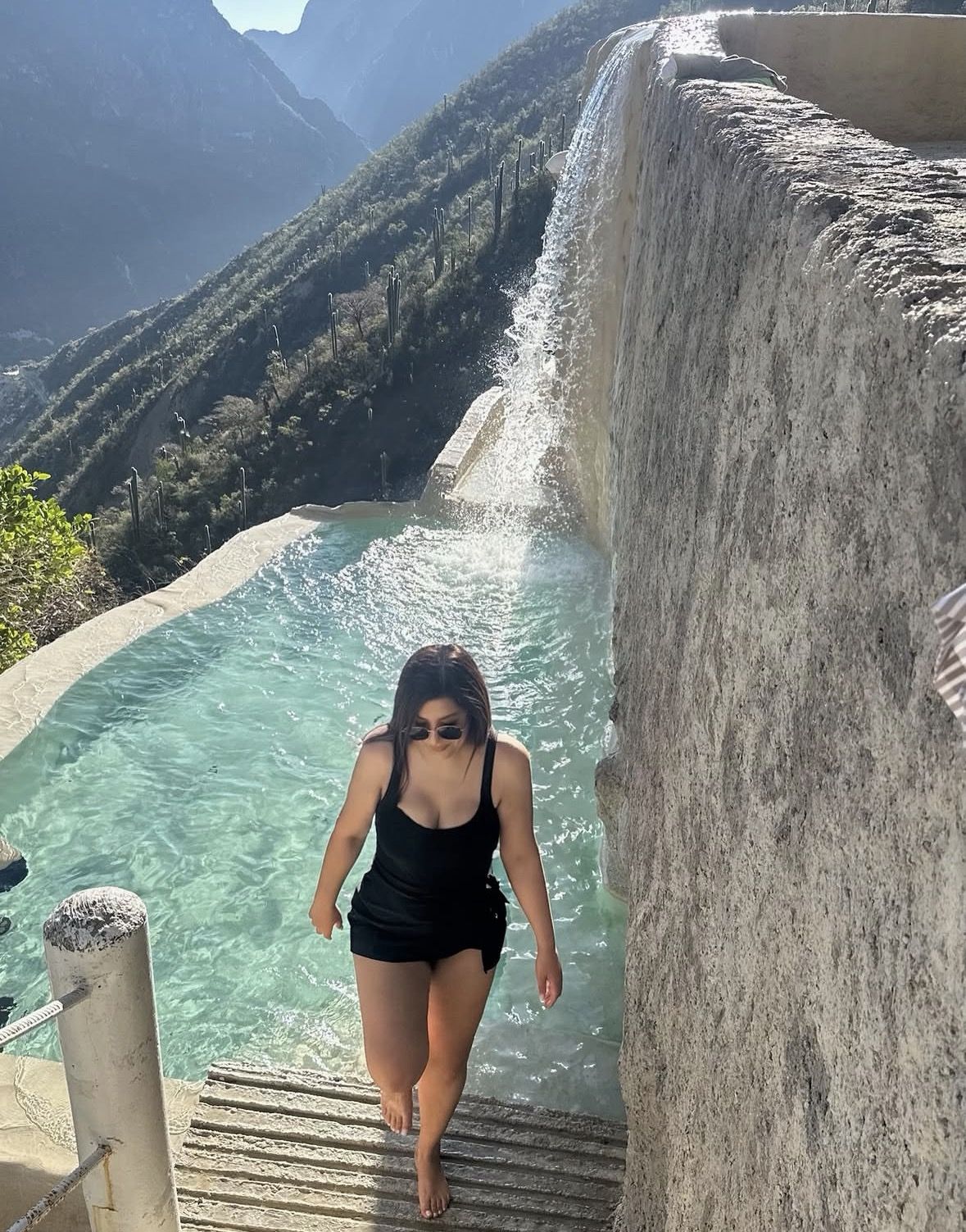
Searches for the best hot springs in Mexico keep landing on Tolantongo, and the reason is geography rather than marketing. You bathe at 1,280 metres, down on the floor of a box canyon with walls as tall as 500 metres; the barranca holding it drops from somewhere near 2,300 metres north-west of Cardonal to about 1,150 metres by Itztacapa, carved through Upper Cretaceous limestone interbedded with shale. No other thermal site within four hours of the capital sits inside a canyon like that.
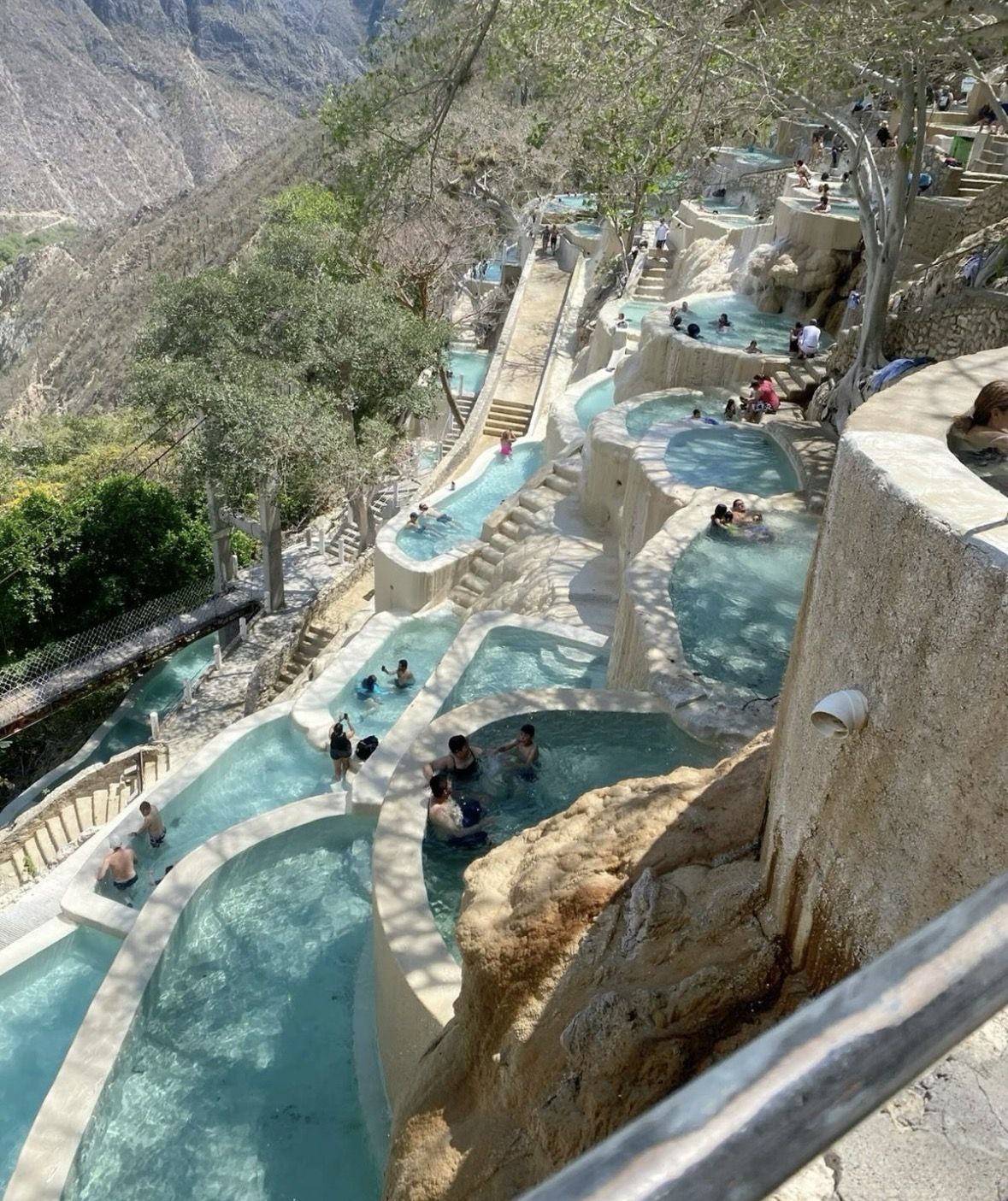
The signature feature is the bank of roughly 40 terrace pools, built one above another on the cliff face and each fed independently through pipes from the spring network; the pools are drained and cleaned every other day. For the cave, the tunnel and the terraces the operator's own pools page quotes 36–38 °C, a notch above the 36 °C average published at Ajacuba. At source, inside the mountain, the water is reported at around 37 °C; where it runs out of the grottoes and mixes with cold river water it goes tepid. Calcium and magnesium in the mineral water are the usual explanation given for the turquoise cast.
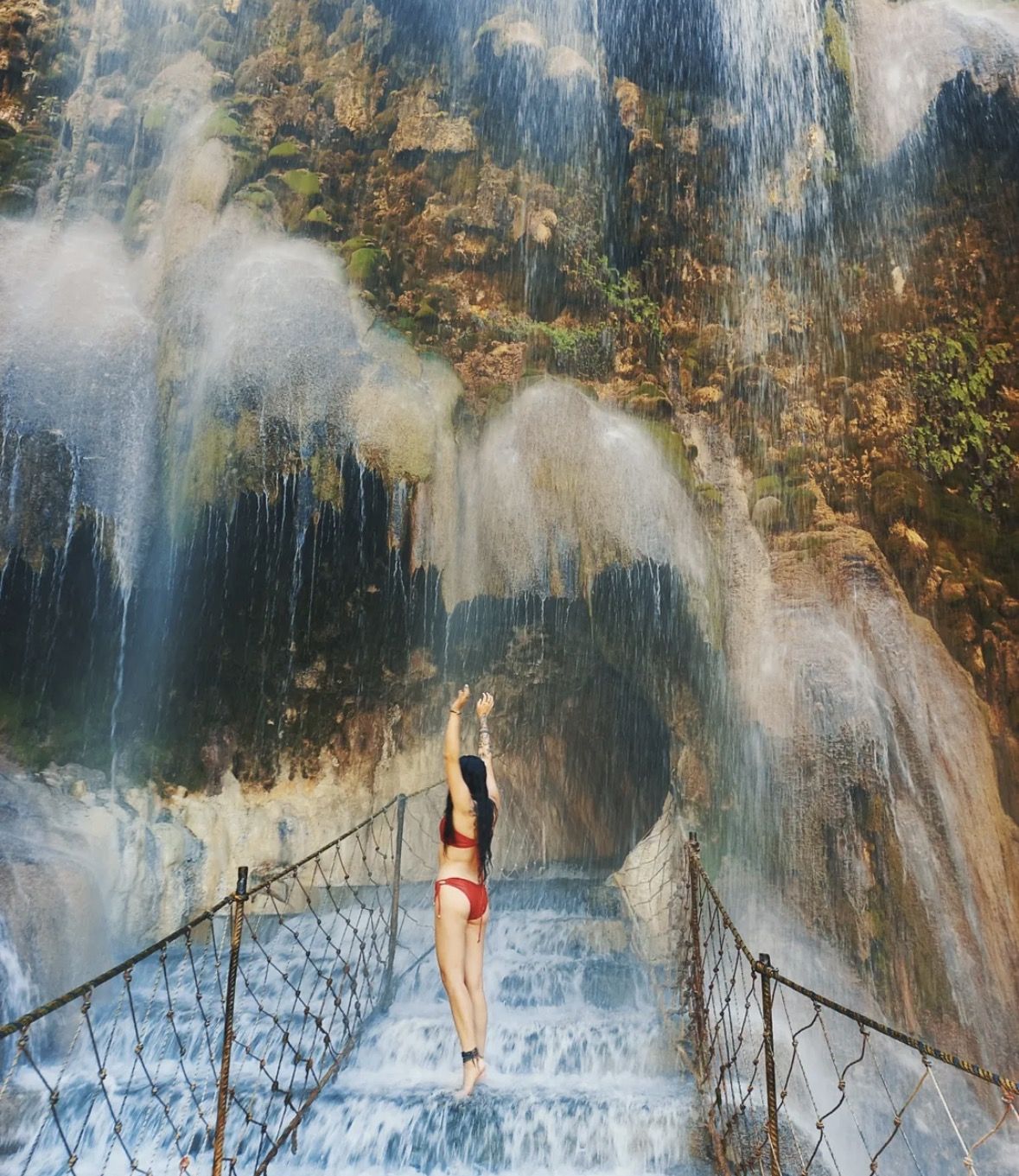
Then there is the grotto itself. Picture a chamber roughly half the floor area of a tennis court, ten metres up to the ceiling at its highest, with hot water showering out of the rock above you. The river is the other thing none of the closer balnearios can offer: shallow, bathable, and open the longest hours of any water attraction in the park. Note that the operator publishes two figures for it, 34–36 °C on the English page and 36–38 °C on the Spanish one, so take either as approximate.
One more thing worth knowing before you go: there are two separate parks here, under two separate ejidos. The grottoes, terraces and river belong to the Sociedad Cooperativa Ejidal 'Grutas Tolantongo', 112 families holding roughly 5,200 hectares of which about 40 are open to visitors. La Gloria Tolantongo, next door, is run by the neighbouring La Mesa ejido and sells its own ticket at MXN 180 for adults, MXN 150 if you arrive on foot across the Puente de Tolantongo, with access from 7:00 to 19:00, water emerging at 38 °C and the Baño del Licenciado waterfall dropping more than 30 metres. The internal shuttle list on the Grutas side does not include it.
A guide alongside you in the canyon
Fourteen hours from $132, rated 4.6 from 351 reviews, with a professional guide, entrance to the Tolantongo caves and round-trip transport from a downtown meeting point at 5:30 am, which suits solo travellers working out the sections for the first time.
★ 4.6/5 · 351 reviews
Day trip hot springs from Mexico City: how the hours work
Be clear-eyed about the distance. The cooperative's own distance table puts the gate 201 km from the capital and allows 3 hours 50 minutes for the drive, so a same-day visit means close to eight hours of road wrapped around your time in the water. That is exactly why organised departures from Mexico City run 13 to 14 hours and meet between 4:30 and 5:30 in the morning.
What the early start buys you is the part of the day the park's clock protects. Opening hours split the place in two: 8:00 to 17:00 for the caves, the tunnel, the waterfalls and the swimming pools, then 8:00 to 21:00 for the thermal river and part of the terrace pools. Tickets are sold at the taquilla from 6:00 to 23:00, which tells you nothing about what is actually open, and the ticket works only on its date of purchase, 7 am to 8 pm. Arrive at midday and you have already lost half the grotto hours.
Inside the gate everything is cash. Entry runs MXN 230 a head for each day you use it. Parking adds MXN 50 per vehicle per day, and the cooperative states plainly that it sells the space without custody or liability. A locker is MXN 150, of which MXN 50 comes back against the key. Moving between sections costs MXN 15–20 per person on the regular shuttle, or MXN 150 a leg for a private run carrying up to five. The zipline is the big optional extra at MXN 300 per person for the complete circuit, four launches of 320, 280, 690 and 600 m, operating 8:00 to 17:00, open to over-10s up to a 93 kg limit and ruled out for anyone with heart problems. Cards are not accepted anywhere and the nearest ATM is in Ixmiquilpan, an hour away.
The two round-trip tour departures from Mexico City take the driving and the timing off your hands:
- Early & Express Tolantongo Hot Springs: 13 hours, from $137, rated 4.9 across 679 reviews, with park tickets and an air-conditioned vehicle in the price and lunch left to you. If you are outside the pick-up zone, a meeting point is confirmed the day before and you need to be standing there by 4:30 am.
- Tolantongo Caves Hot Springs & Waterfalls Small Group Tour: 14 hours, from $132, rated 4.6 across 351 reviews. A professional guide stays with the group, caves entrance and round-trip transport are in the price, water is not, and the box lunch applies only if you select that option. The guide meets you downtown at 5:30 am.
- Licensed operators run both, and on either one the full fare is refunded if you cancel 24 hours or more before the scheduled departure time.
Questions people ask
Which thermal baths are closest to Mexico City?
Xhandos Ajacuba is the shortest run at about 1 hour 30 minutes from the capital, with pools averaging 36 °C and admission of MXN 140 general. Ixtapan de la Sal is 116 km and roughly 1 hour 45 minutes, and Las Estacas in Morelos about two hours. Tolantongo is the long one at 201 km and about 3 hours 50 minutes each way.
Does one ticket cover both Tolantongo parks?
No. Two ejidos run two tills here. San Cristóbal operates Grutas Tolantongo, where entry is MXN 230 per person for each day of the visit, and the La Mesa ejido operates La Gloria, charging MXN 180 for adults, the full rate from a child's sixth birthday, and MXN 150 for anyone walking in across the Puente de Tolantongo. The Grutas internal shuttle covers La Gruta, La Cadena, La Huerta, Rancho and Paraíso; La Gloria is absent from that list.
How much cash should I take to Tolantongo?
Enough for everything, with a margin. Tickets, food, the shop, shuttles, lockers and rooms are all cash, cards are not accepted anywhere in the park, and there is no ATM nearer than Ixmiquilpan, 42.9 km and about an hour away. Budget MXN 230 per person per day of entry plus meals and any extras such as the MXN 300 zipline circuit, and withdraw before you start down the canyon road.
Is there a bad time of year to go?
Closures are not the issue: the park works 365 days a year, 7 am to 8 pm. The water is. By the operator's own reckoning the rainy stretch falls between mid-June and mid-July, and it tells visitors not to camp near the riverbank in that window; Ixmiquilpan's wet season is longer, about 4.4 months from 1 June to 12 October, peaking near 137 mm of rain in September against some 9 mm in December. A hard mountain downpour lifts the river fast and takes the turquoise out of it, and in July 2021 campers were shifted to higher ground while the grottoes were roped off.
Can the Basaltic Prisms be added to a Tolantongo day?
Not in one day. Santa María Regla lies 111 km from Grutas de Tolantongo, around 2 hours 31 minutes of driving, and each site sits at the far end of its own mountain road. From Mexico City the Prismas are about 120 km and roughly 1 hour 42 minutes, admission MXN 100 and the park open 8:00 to 19:00, so they make an easier standalone day.
Read also