In shortTolantongo is a Nahuatl place name, and the translation is disputed. The reading recorded most often takes it from tonalli, 'heat of the sun', plus the locative ending -go/-co, 'place of', which comes out as roughly 'where it feels warm'. Locally the name was written Tonaltongo until 1975; that year the director of México Desconocido, Harry Möller, printed 'Tolantongo', and the new spelling stuck. Grutas, in the resort's name, is simply Spanish for caves.
1975Year the new spelling stuck
36–38 °CCave and terrace pools
1,280 mAltitude of the pools
112 familiesOwn and run the resort
What does Tolantongo mean in English?
There is no agreed translation, and Spanish-language reference writing records the etymology as disputed. The version documented most often reads the word as Nahuatl tonalli, 'heat of the sun', closed by the locative ending -go/-co, which carries the sense 'place of'. Put together, those two pieces give something like 'where it feels warm'.
English write-ups usually hand you one confident gloss, and it is nearly always built from the same two parts: a word for heat and a suffix meaning 'place of'. Take any of them as one possible reading. The structure is the useful bit, because once you can spot the locative ending you can see how every competing 'place where...' version was assembled.
| Element | Language | Sense given to it |
|---|
| tonalli | Nahuatl | heat of the sun |
|---|
| -go / -co | Nahuatl locative ending | place of |
|---|
| grutas | Spanish | caves, grottoes |
|---|
The spelling changed in 1975
The spelling on today's road signs is recent. Locally the place was written Tonaltongo until 1975, when the director of México Desconocido, Harry Möller, printed it as 'Tolantongo'. The printed form travelled further than the local one and became standard.
That date matters for the Tula question. The first syllables of the modern spelling look like Tollan, the older Nahuatl name behind Tula de Allende, about 104 km and roughly 1 hour 54 minutes away by road, and plenty of readers join the two on sight. It is a hard link to lean on when 'Tolan-' only appears in print from 1975 and the earlier written form, Tonaltongo, points at tonalli instead.
How the canyon came to be worked and run by its own ejido is a separate story, told on our history page. What follows here stays with the word and the forms it takes.
Which spelling to use when you search
Expect inconsistency. Older Spanish texts use Tonaltongo, current signage and the park's own pages use Tolantongo, and people who have only heard the name spoken swap the middle syllables in both directions. Neither the park nor any linguistic authority we could check publishes pronunciation guidance, so you will hear variation locally.
For practical purposes, search and write it as Tolantongo. That is the spelling on the cooperative's price and information pages, on the published address at San Cristóbal, Municipio de Cardonal, Hidalgo, 42370, and on every timetable you will need.
Why 'where it feels warm' fits this canyon
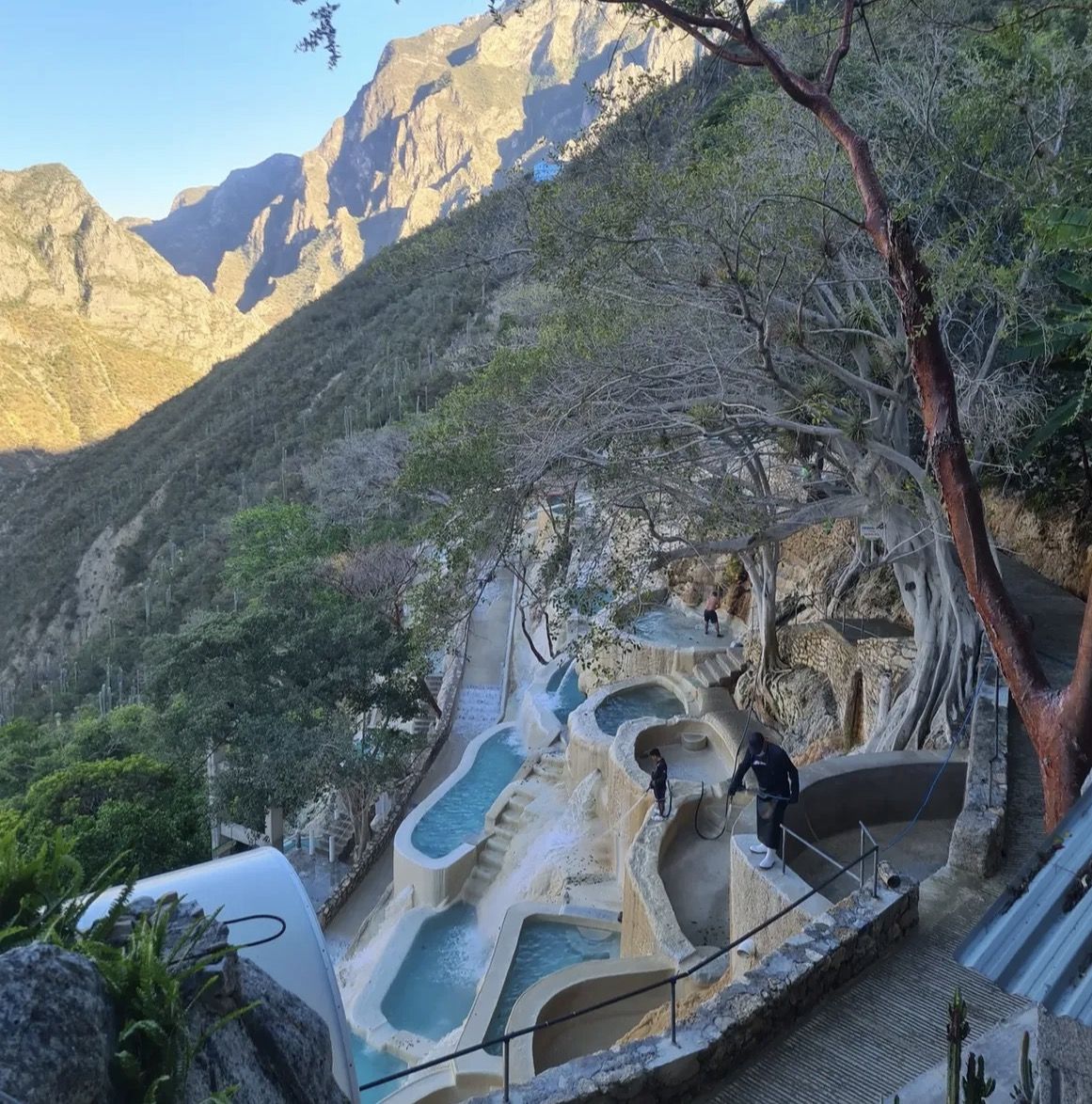
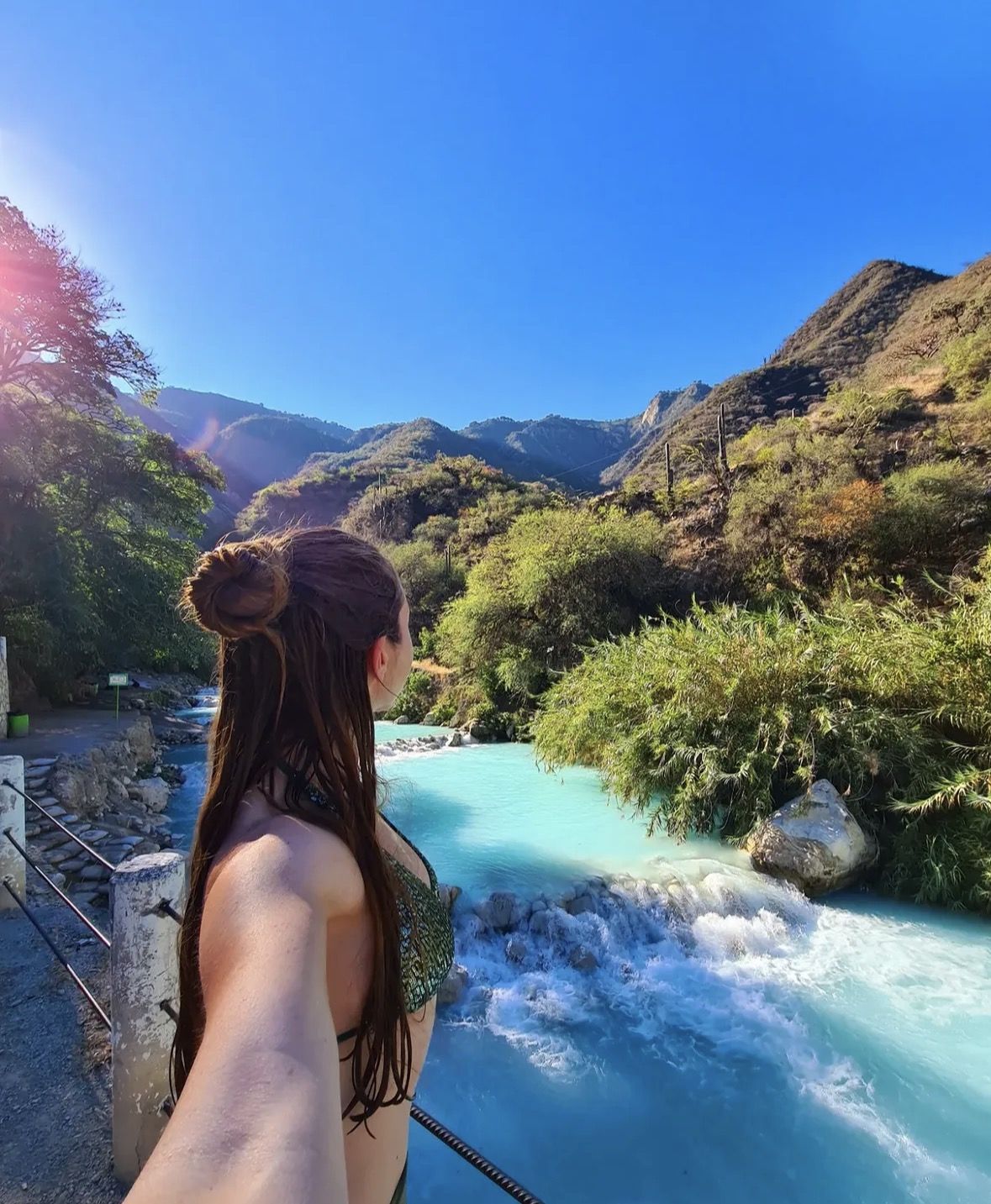
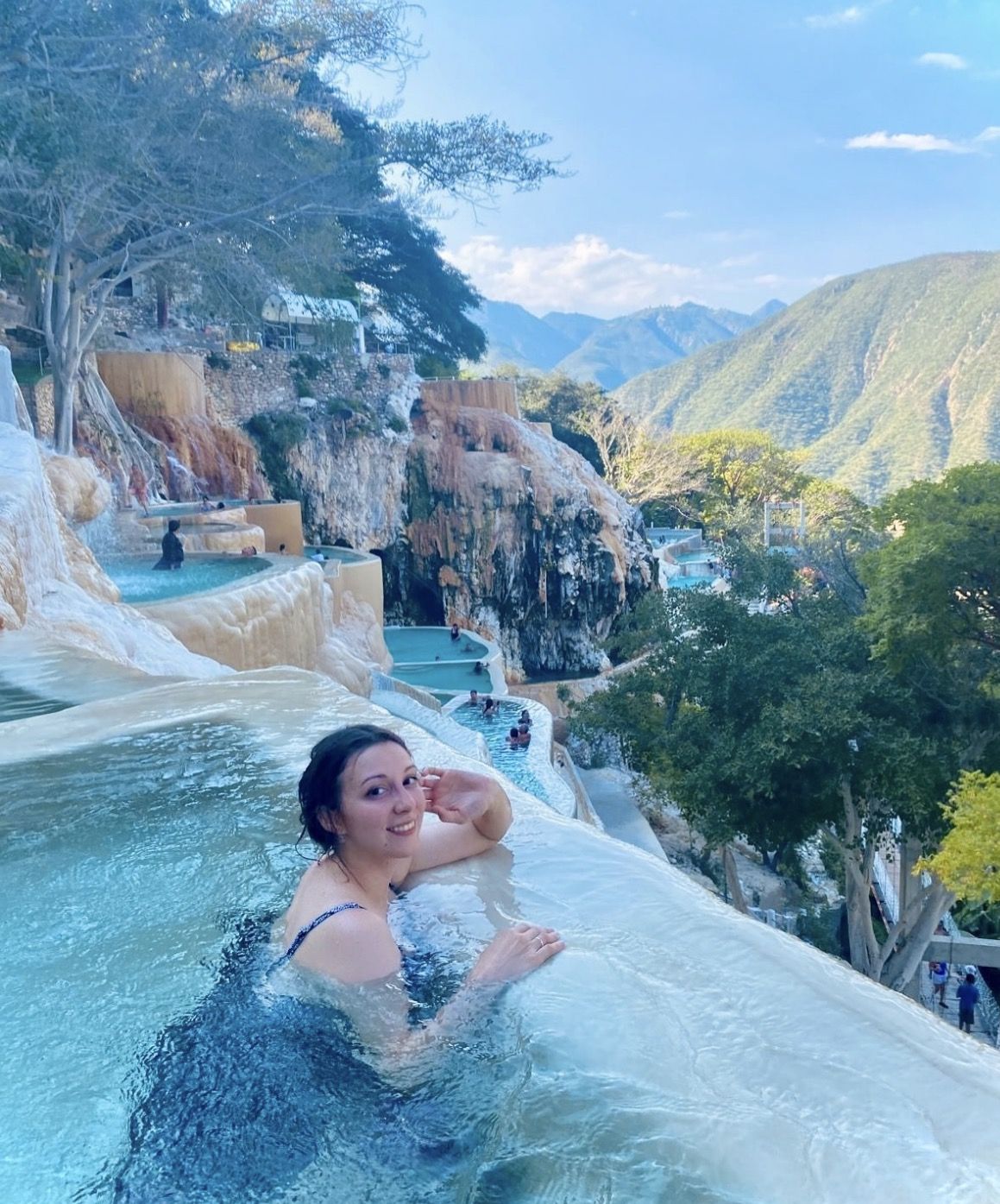
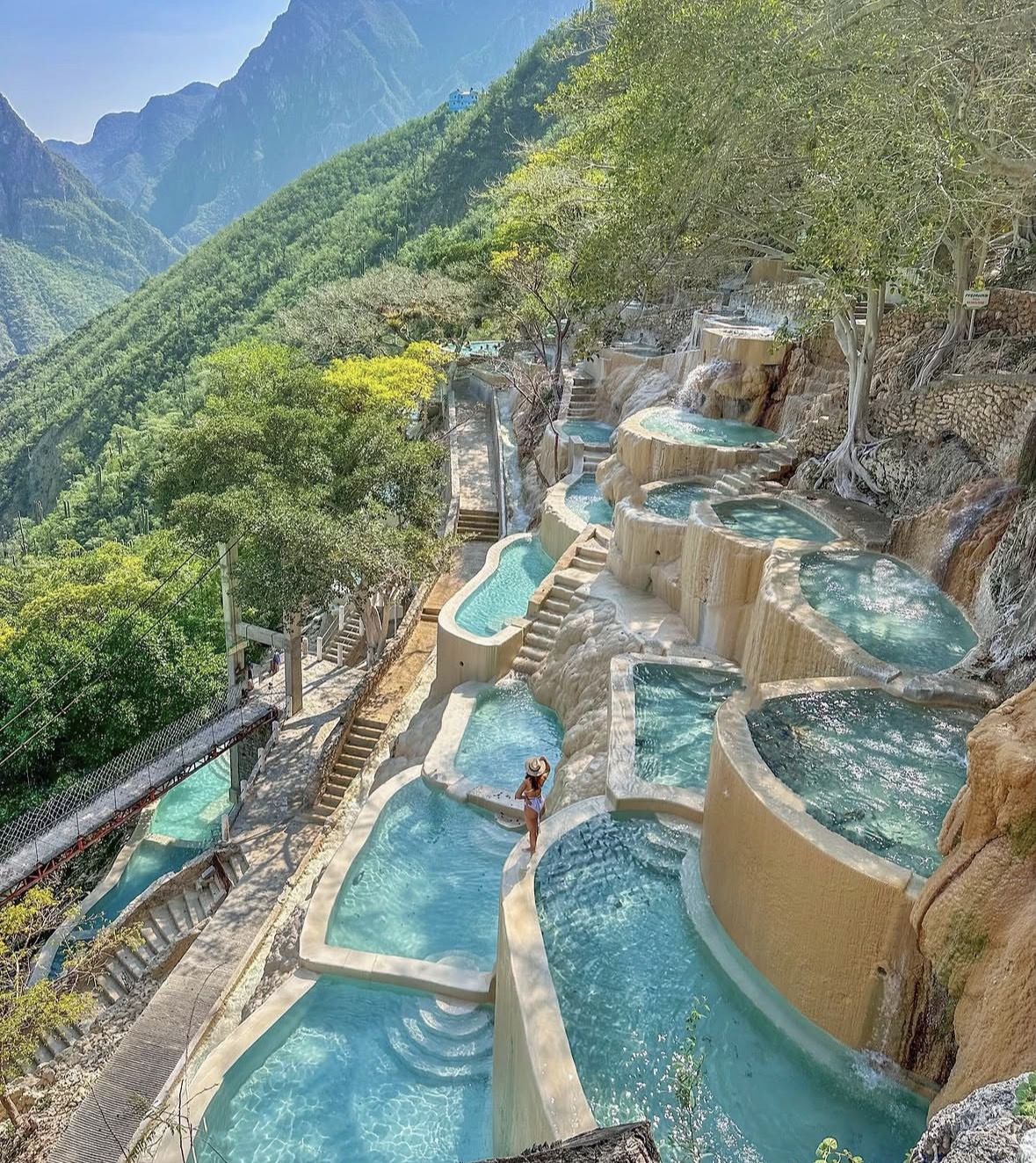
The reading makes sense the moment you are standing in the barranca. Water surfacing inside the mountain is reported at about 37 °C, and the park's own pools page gives the cave, the tunnel and the terrace pools as 36 to 38 °C. The pools sit at 1,280 metres on the canyon floor, with limestone walls rising as much as 500 metres either side, so the warmth is concentrated in a narrow strip of ground rather than spread across a region.
Winter makes the contrast obvious. Overnight lows at Ixmiquilpan, the nearest town, average around 8 °C in January, and a cold dawn in the terraces is the version of Tolantongo most people remember. Whoever coined the word was describing a constant, since the warmth comes up out of the rock and holds through the coldest weeks of the year.
The name tells you nothing about opening hours, and those are what catch people out. A 17:00 close applies to the grotto, the tunnel, the waterfalls and the swimming pools; only the thermal river and some of the terrace pools hold out until 21:00. Do the caves first.
Heavy mountain rain can lift the river quickly and turn the turquoise water brown, and in the rainy season visitors are told to stay away from the river and follow the instructions of security staff.
The full day from Mexico City
If reading about 36 to 38 °C water has settled it, this 14 to 16 hour departure covers the road in both directions, from $134, rated 4.8 from 1,569 reviews.
★ 4.8/5 · 1,569 reviews
Why the park is called Grutas Tolantongo
The resort's full name mixes two languages. Grutas is Spanish for caves or grottoes, attached to the Nahuatl place name because the cave is what the site was known for first. Half a tennis court is roughly the floor area of that main chamber, with a ten-metre ceiling above it and hot water arriving as rain off the rock.
'Tolantongo' names the canyon and its warm water; 'Grutas Tolantongo' names the park built around them. Our attractions pages go through what each part of that park holds, from the roughly 40 terrace pools stacked up the cliff face to the tunnel, the suspension bridge in the Paraíso Escondido zone and the zipline circuit.
Who owns the name
Behind the name sits a registered owner, the Sociedad Cooperativa Ejidal 'Grutas Tolantongo', a body of 112 families whose land runs to roughly 5,200 hectares, with only about 40 of them open to visitors. The word is a trading name as well as a place name, which is part of why it turns up on so many websites.
Its own public notice says the brand gets copied by look-alike websites selling fraudulent offers, and that nothing bought through a third party is the cooperative's responsibility. Check who you are dealing with before you pay for anything with 'Tolantongo' in the domain.
- We are an independent English-language resource that sells tour bookings, with no affiliation to the cooperative
- Every departure listed here is run by a licensed operator
- Any of them can be cancelled up to 24 hours before the start time for a full refund
- Prices stay in the currency the operator uses, USD on some products and MXN on others
Questions people ask
Is Tolantongo a Nahuatl word or a Spanish one?
The place name is Nahuatl, and the ending gives it away: -go/-co is a locative suffix meaning 'place of'. The resort name mixes languages, since grutas is Spanish for caves. You will also see the Spanish barranca used for the canyon the river has cut.
Does Tolantongo mean 'place of hot water'?
That gloss circulates widely, but it is not the documented one. The reading found in Spanish-language reference writing goes through tonalli, 'heat of the sun', plus the locative ending, giving roughly 'where it feels warm'. The etymology is recorded as disputed, so no single English translation can be called correct.
Why do older sources write Tonaltongo?
That was the local written form until 1975. In that year the director of México Desconocido, Harry Möller, printed 'Tolantongo', and the new spelling took over. Both forms still turn up, especially in older Spanish-language material.
Is Tolantongo related to Tula?
People ask because the modern spelling resembles Tula's older Nahuatl name, but the 'Tolan-' form only dates from 1975, which weakens the link. Geographically they are separate trips: Tula de Allende is about 104 km and roughly 1 hour 54 minutes from Grutas de Tolantongo, so give the archaeological zone its own day.
What is the park's full official name?
The owner and operator is the Sociedad Cooperativa Ejidal 'Grutas Tolantongo', an ejido cooperative of 112 families. It holds roughly 5,200 hectares, with only about 40 hectares open to visitors, and the published address is San Cristóbal, Municipio de Cardonal, Hidalgo, postal code 42370.
Read also