Tolantongo: Hot Springs, Caves and Terrace Pools in a Hidalgo Canyon
The pools sit at 1,280 metres on the floor of a box canyon with walls as high as 500 metres, 201 km and about 3 hours 50 minutes by road from Mexico City. The day tours on this site leave before dawn, run 12 to 16 hours and cancel free up to 24 hours before departure. Check availability.
Round-trip transport, park entrance and a guide for the terrace pools, the cave and the turquoise river — pick the departure city and the pace that suit you.
The resort lies 1,280 metres above sea level at the bottom of a box canyon whose walls rise as much as 500 metres. The rock is Upper Cretaceous limestone interbedded with shale, dipping 30 degrees or more, and the Barranca de Tolantongo falls from about 2,300 m north-west of Cardonal to roughly 1,150 m near Itztacapa. Water heated inside the mountain comes out at about 37 °C and turns tepid where it meets cold river water below the grottoes.
Two separate parks share the name, which catches people out. Grutas Tolantongo belongs to the San Cristóbal ejido; La Gloria is run by the La Mesa ejido and charges its own admission of MXN 180 for adults, MXN 150 for anyone arriving on foot over the footbridge, access 7:00 to 19:00, parking MXN 20 per vehicle. The internal shuttle list at the grottoes covers La Gruta, La Cadena, La Huerta, Rancho and Paraíso, and not La Gloria. One of the full-day tour departures visits both in the same day.
The clock inside the park is the real planning problem. The ticket office works 6:00 to 23:00, far longer than anything you came for: the caves, the tunnel, the waterfalls, the swimming pools, the suspension bridge, the zipline and the lockers all run 8:00 to 17:00. Only the thermal river and some terrace pools stay open until 21:00, with the restaurant and grocery store to 22:00. Music and disruptive noise stop at 23:00.
Water Temperature36–38°C
Canyon Elevation~1,280 m
Distance from CDMX~201 km
Park Hours7 am – 8 pm
Entry Fee (approx.)230 MXN
Managed ByEjido Community
38°C
Naturally Heated Waters
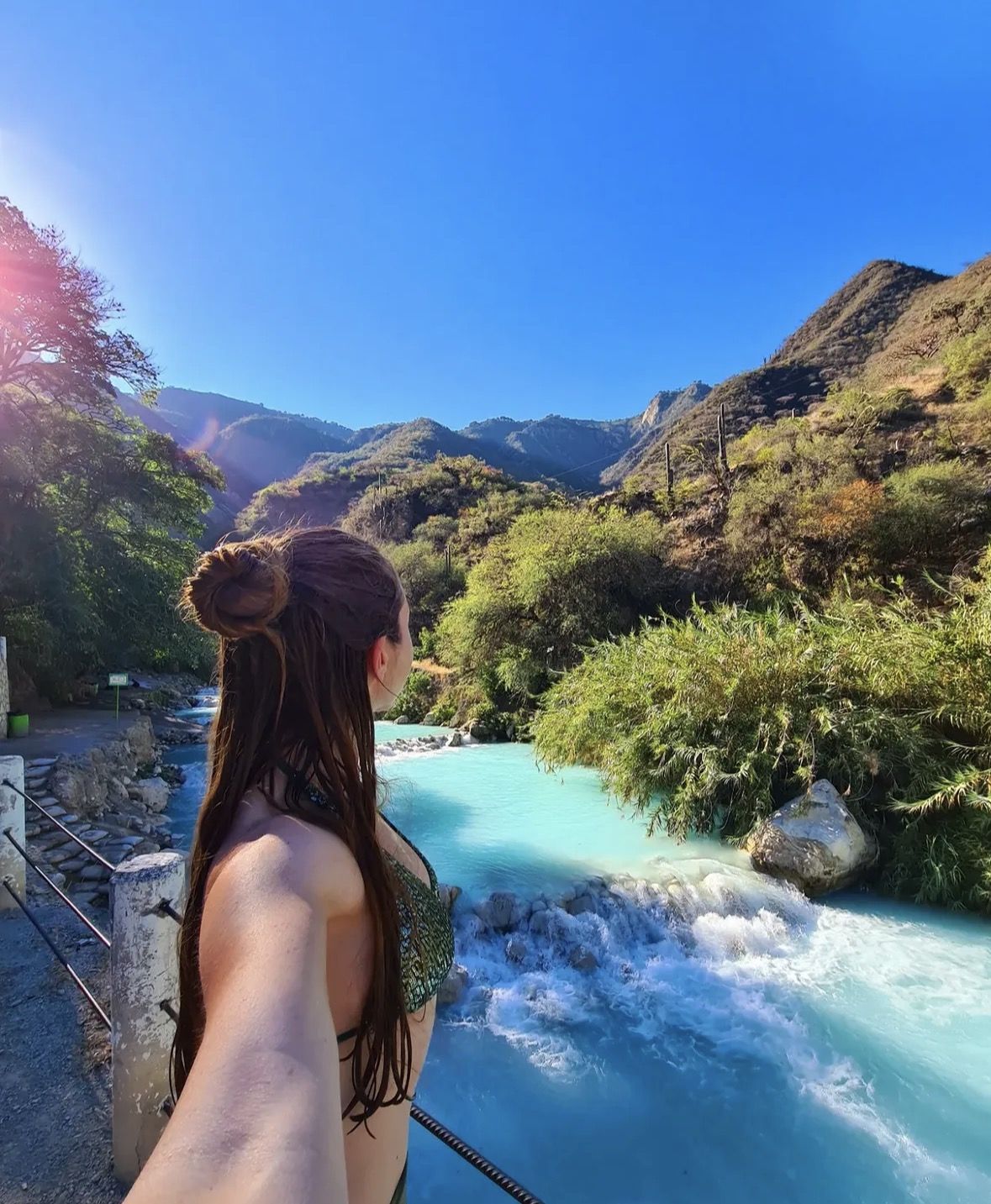
The cave, tunnel and terrace pools are published at 36 to 38 °C. For the river the park's own pages disagree: the English version gives 34 to 36 °C, the Spanish version 36 to 38 °C, so both figures come from the same source in different languages. The turquoise cast is usually put down to calcium and magnesium in the mineral water.
201 km
Close to Mexico City
Road distances as the resort gives them: 201 km and about 3 hours 50 minutes from Mexico City, 193 km and 3 hours 6 minutes from Querétaro, 117 km and 2 hours 28 minutes from Pachuca, 42.9 km and 1 hour 11 minutes from Ixmiquilpan. Tolls on the drive from Mexico City total roughly MXN 127, of which MXN 72 is charged at the Ojo de Agua booth.
112 families
Community-owned park
Grutas Tolantongo belongs to the ejido cooperative of San Cristóbal: 112 families who hold about 5,200 hectares of the canyon, of which only some 40 are open to visitors. The cooperative warns that look-alike websites use its name to sell fake offers.
500 m
Thermal River Canyon
The thermal river runs along the canyon floor and keeps the longest hours of any water attraction, 8:00 to 21:00. The park describes the bathing stretches as shallow, requires swimwear and admits babies only in aquatic nappies. There are security staff whose instructions you follow, and no lifeguards are advertised. In the rainy season stay out of the water: heavy mountain rain raises the river quickly and muddies it.
1 Cave
The Famous Gruta
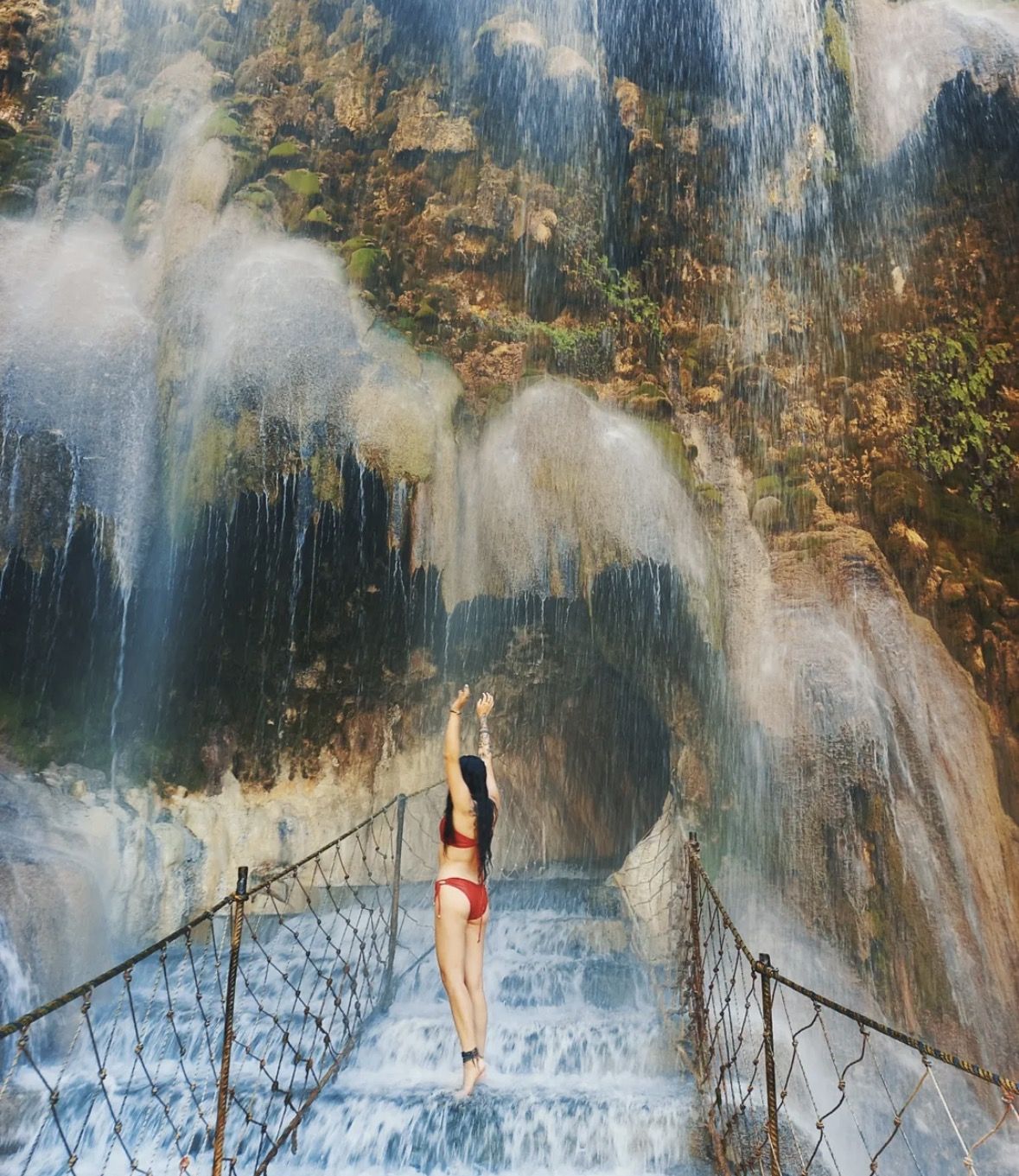
The main grotto chamber is about half the size of a tennis court, with a ceiling up to ten metres high and hot water showering down out of the rock. The source water inside the mountain is around 37 °C. Entry to the grotto, tunnel and pools stops at 17:00, which is why these tour departures leave Mexico City between roughly 4:20 and 5:50 am.
Cash Only
No Cards Accepted
Cash everywhere, with no exceptions: tickets, restaurants, the shop, the hotel rooms. Cards are not accepted anywhere in the park and there is no ATM at or near it, the nearest being in Ixmiquilpan an hour away. Budget MXN 230 a head for admission, MXN 50 for a vehicle, MXN 15 to 20 per person for the internal shuttle and MXN 150 for a locker, MXN 50 of which comes back when you return the key.
The terrace pools
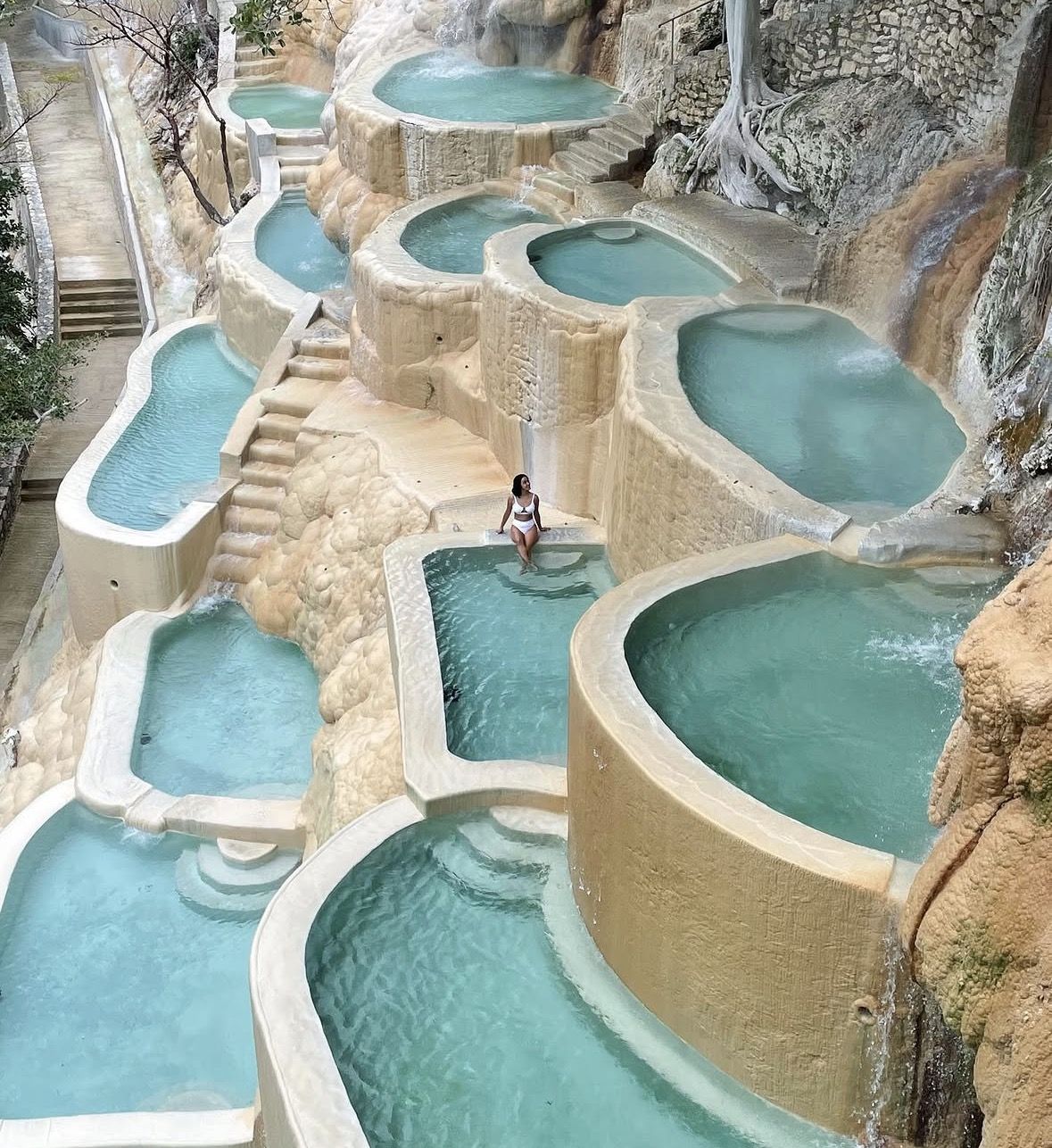
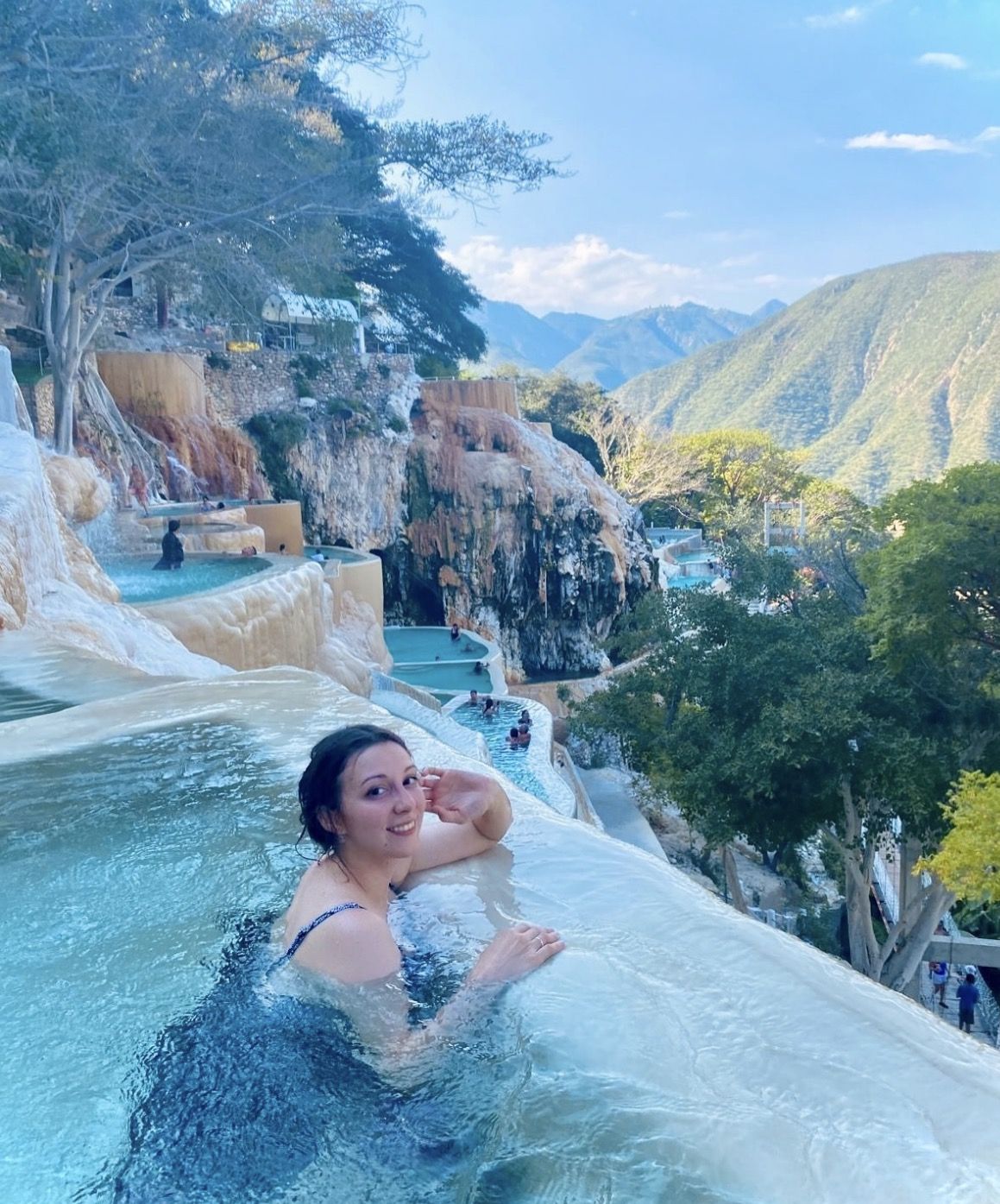
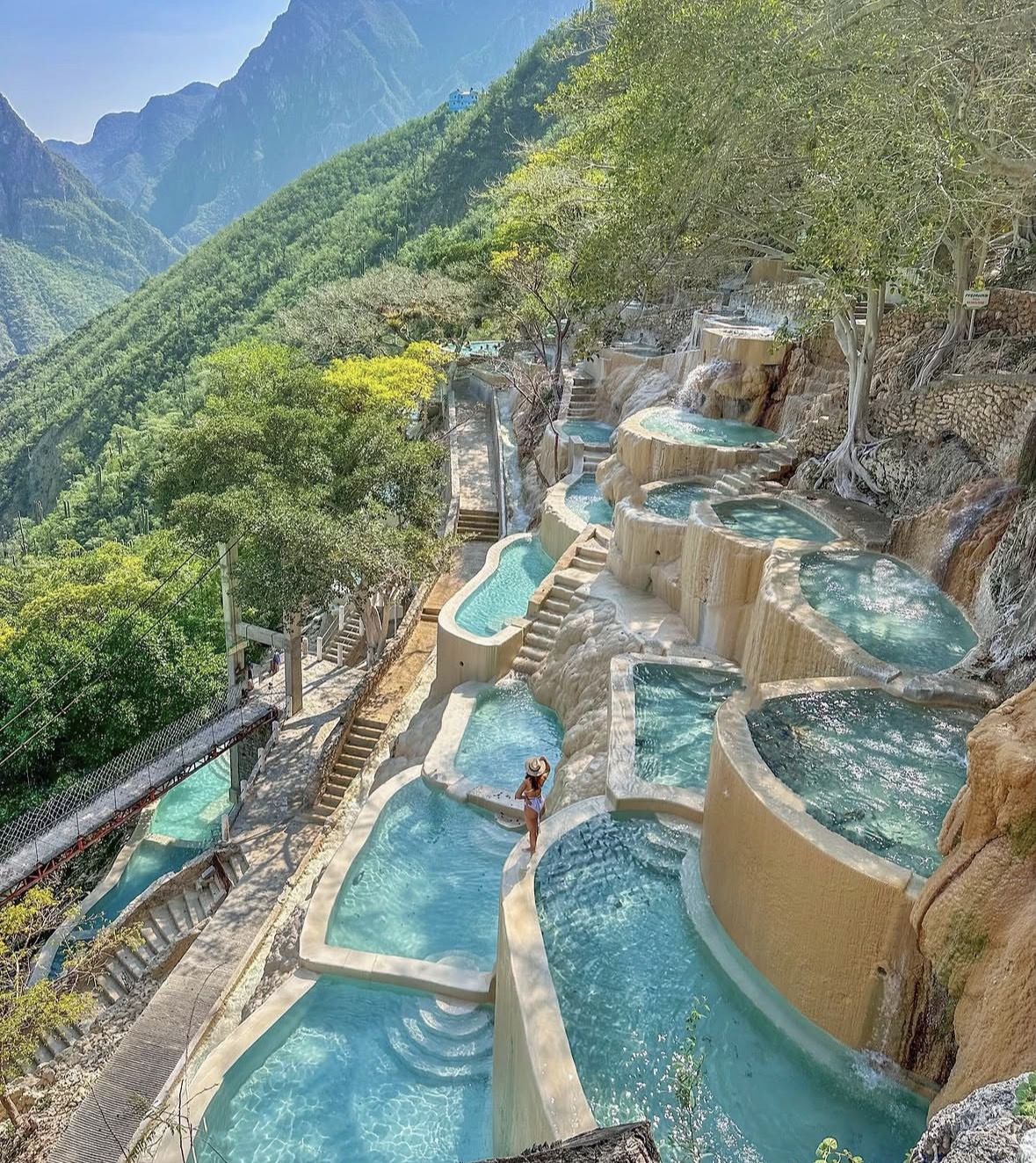
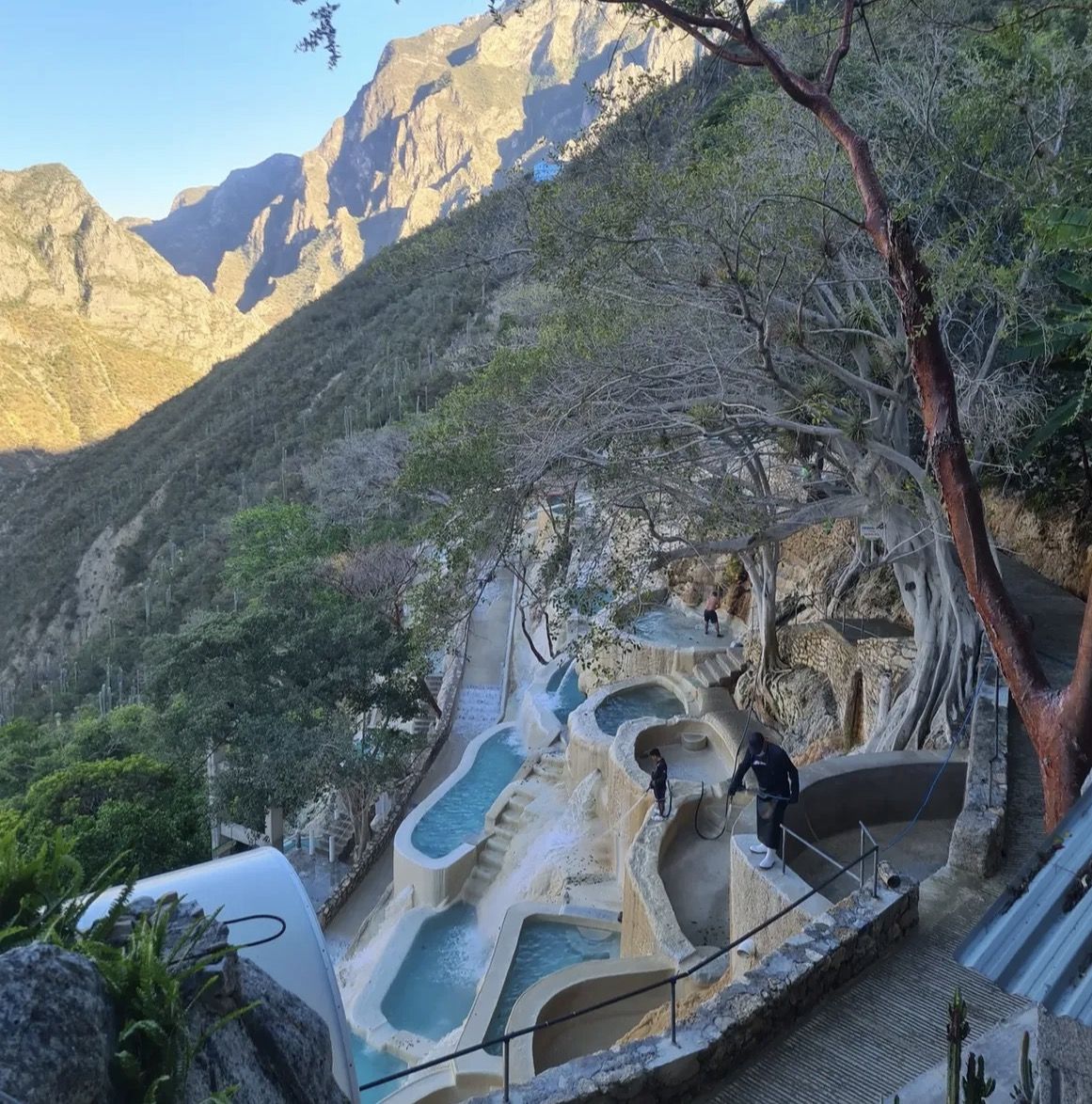
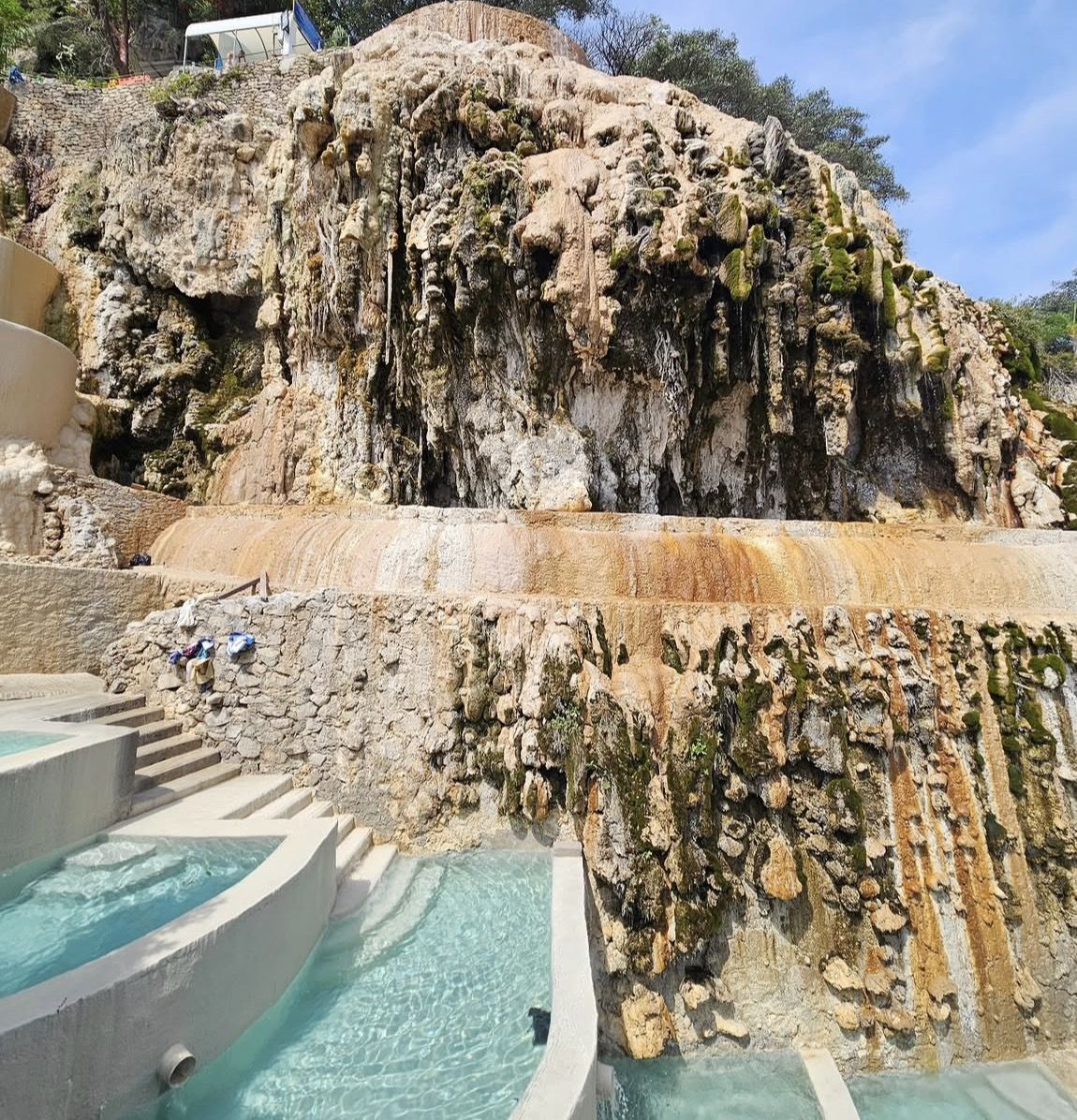
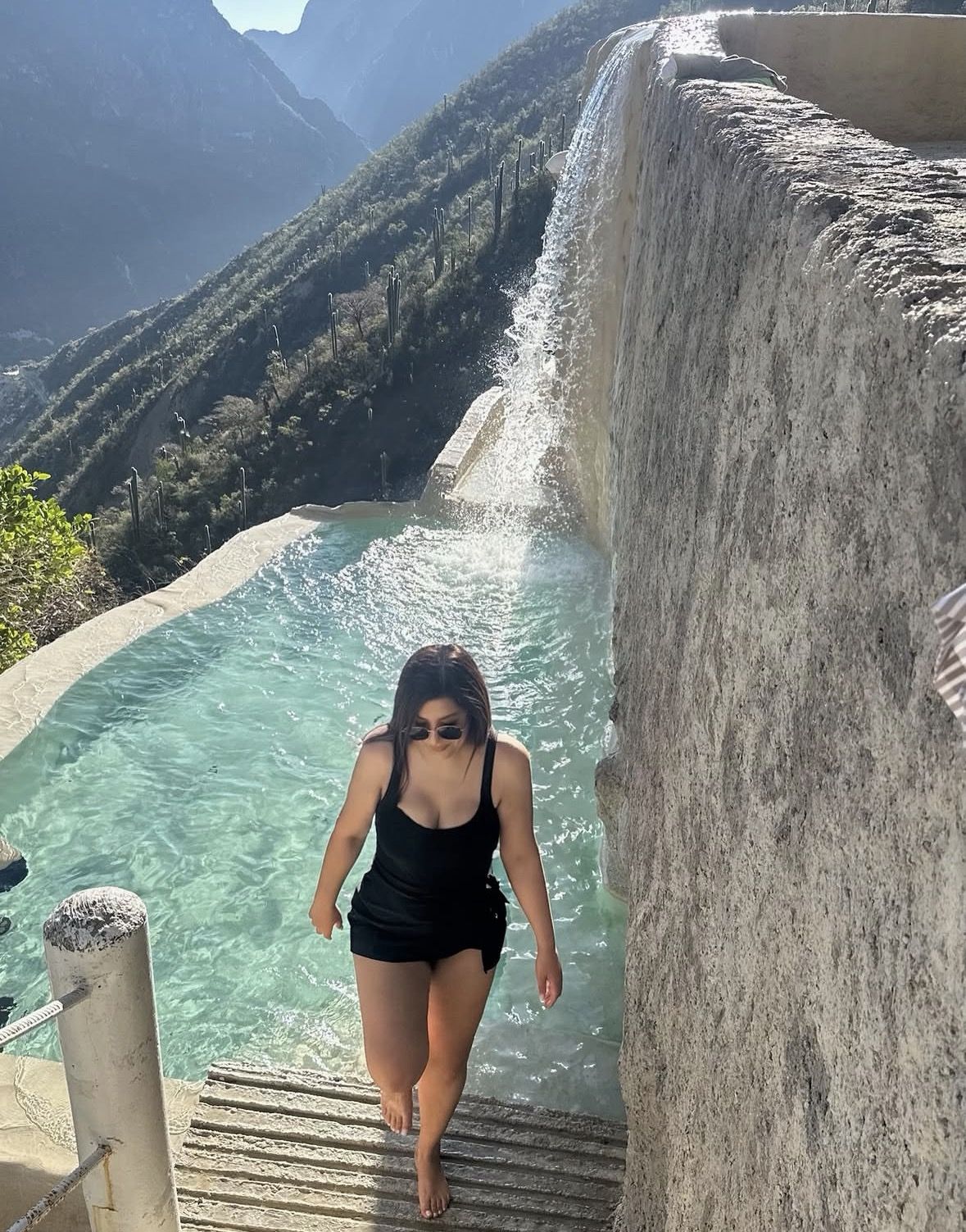
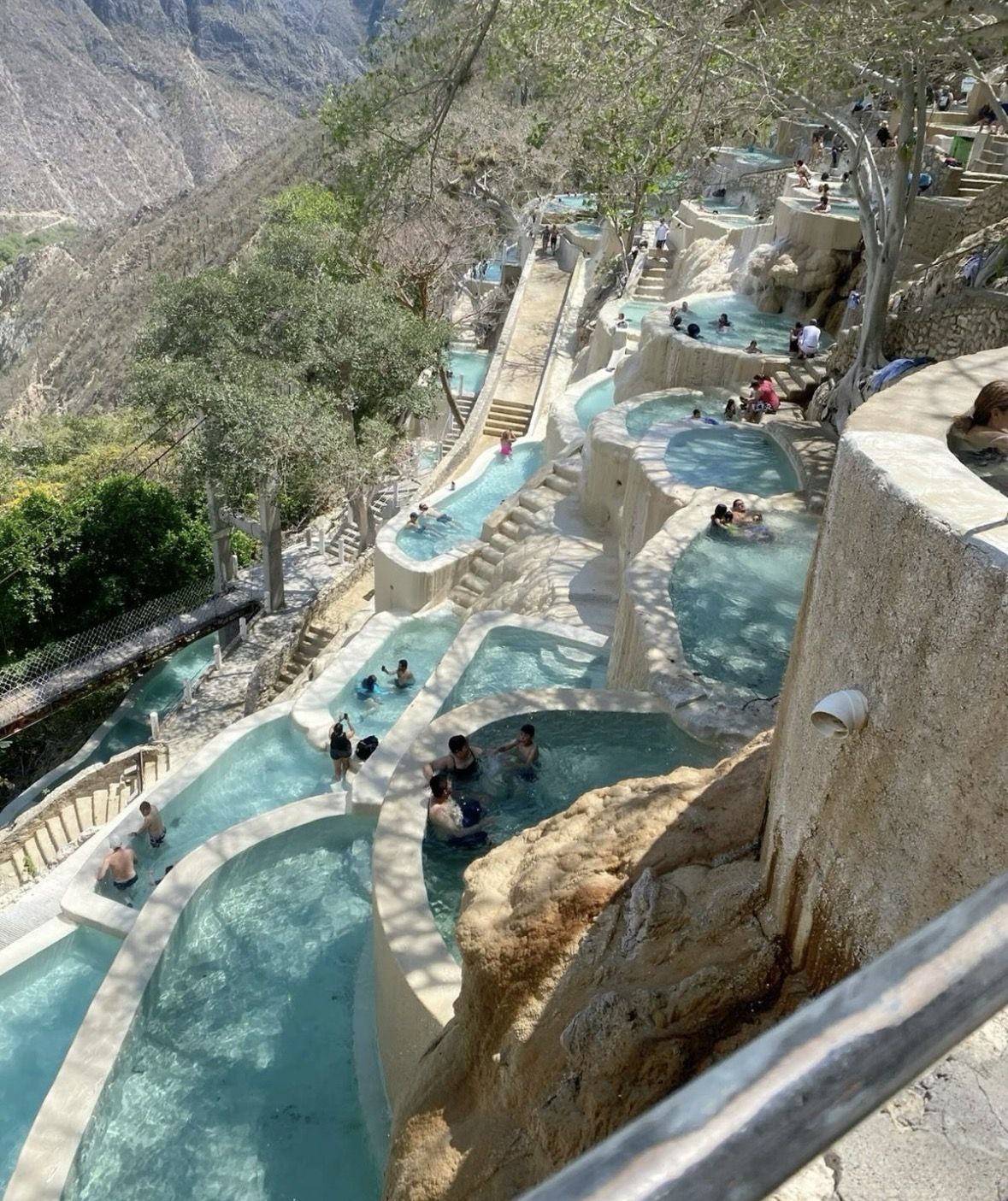
About 40 pools are built one above another on a cliff face, each fed independently with thermal water piped from the spring cave at the head of the canyon, and the network is drained and cleaned every other day. They sit in the Paraíso Escondido section along with a swimming pool with a slide and the túnel paraíso. Published temperature is 36 to 38 °C.
Swimming in the cave
The grotto is what most people come for: a chamber the size of half a tennis court, hot water falling from the rock, daylight from the entrance. Swimwear is required, plus footwear you can walk in on wet stone. Go in the morning, because the cave and the tunnel shut at 17:00 and the drive back is close to four hours.
The thermal river
Wading the river is the easiest part of the day and the part you can still do in the evening, since it runs to 21:00. It belongs to the Pánuco hydrological region, Moctezuma basin and Amajac sub-basin. Children need watching the whole time, and the park warns that some of its pools elsewhere are deep enough to need a competent swimmer.
The suspension bridge
The bridge hangs in the El Paraíso Escondido zone and costs nothing extra, being named among the attractions covered by the MXN 230 ticket. It is open 8:00 to 17:00. Posted rules ask for comfortable shoes, continuous supervision of children and no running, shouting, pushing or playing on the structure.
The zipline
Four launches of 320 m, 280 m, 690 m and 600 m, 1,890 m in total, at MXN 300 per person and not part of admission. It operates 8:00 to 17:00 and takes riders over 10 years old up to 93 kg. The park classes it as an extreme sport: you sign a waiver, leave backpacks and caps behind, wear light footwear and do not launch with a wet body. Skip it if you have heart problems.
The waterfalls
The falls fall inside the same 8:00 to 17:00 block as the caves, and the park publishes no measurements for them. Do not try to climb them, which the park states outright. At La Gloria next door the Baño del Licenciado drops more than 30 metres with a mini-grotto behind it, and the Cola de Caballo in the canyon is reported at 150 m.
Four ways to spend the day, with what each costs and how much of the logistics lands on you.
These tour departures all start in the dark, because the caves and pools close at 17:00 and the road takes close to four hours each way. The full-day group tour runs 14 to 16 hours from $134, rated 4.8 from 1,569 reviews, with a Mexican breakfast buffet and a loan backpack. The early express runs 13 hours from $137 with park tickets and a pick-up between 4:20 and 5:00 am. The small-group day is 14 hours from $132 with entry and an optional box lunch, the caves-focused day 12.5 hours from $80 for up to six people with the MXN 230 ticket paid separately, and from Querétaro there is a 10-hour tour from $194 with tickets included. Compare the tours.
How long
From
Best for
What you organise
★ Full-day tour from Mexico City
14 to 16 hours; meeting at the Ángel de la Independencia around 5:35 to 5:50 am
from $134, entry included
A first visit with no car and English-speaking guides
Nothing: private transport, breakfast buffet, loan backpack with towel, headlamp and phone pouch
Private tour from Mexico City
13 hours; pick-up at your own address from 5 am
from $171, entry included
Families and couples who want their own pace
Nothing: private air-conditioned vehicle, tickets, bottled water, snack bag
Driving yourself
201 km and about 3 hours 50 minutes each way from Mexico City
~$13 (MXN 230) per person, ~$3 (MXN 50) parking, roughly $7 (MXN 127) in tolls
Drivers used to mountain roads who carry enough cash
Route via Ixmiquilpan and the Libramiento a Cardonal, parking space with no custody, all your own timings
Bus plus shuttle
Bus from gates 7 and 8 at the Central del Norte to Ixmiquilpan, then 42.9 km and about 1 hour 11 minutes by shuttle
~$4 (MXN 80) per person each way on the shuttle, plus bus fare and ~$13 (MXN 230) entry
Travellers already sleeping in Ixmiquilpan or the park
Every connection: shuttles leave Ixmiquilpan from 09:30 to 17:30 and the last run back from the park goes at 17:30
Coming from Mexico City or Querétaro for the day, take a tour: the final shuttle out of the park leaves at 17:30 and bus connections cannot get you there and back between the gate opening and the 17:00 closures. If you intend to sleep inside the park you will need your own vehicle, since only Rancho and Paraíso #2 take reservations and the other sections rent rooms on arrival. See the tour that matches your departure city and check availability for your date.
Practical planning
Planning a Day at Tolantongo
Hours, cash, the drive and what goes in the bag.
How to Get to Tolantongo from Mexico City
The route runs on the Mexico City to Pachuca motorway, then the Actopan to Ixmiquilpan road, and at Ixmiquilpan you turn right onto the Libramiento a Cardonal and drop down to San Cristóbal. The resort gives 201 km and about 3 hours 50 minutes; tolls come to roughly MXN 127 in total, MXN 72 of that at Ojo de Agua. The much-publicised Santiago de Anaya to El Cardonal shortcut was still unfinished in January 2026, with sections in poor condition and no completion date announced, so do not plan around it. From Pachuca the same road gives 117 km and 2 hours 28 minutes.
By bus, OVNIBUS and FLECHA ROJA leave from gates 7 and 8 at the Central del Norte for Ixmiquilpan. From Pachuca the lines are PAI, AVM and CONEXION, with Conexión alone running about 18 departures a day between 05:15 and 19:15, roughly 1 hour 38 minutes direct for MXN 42 to 61. From Ixmiquilpan the cooperative's own shuttle costs MXN 80 per person per trip and leaves the parking area beside the San Antonio church at 09:30, 11:30, 13:30, 15:30 and 17:30, hourly from Friday to Sunday; collective microbuses towards Cardonal use the same lot. A second shuttle links Molanguito, 8 km out, for MXN 30.
Mexico City to the park: 201 km, about 3 hours 50 minutes, tolls around MXN 127
Route: Mexico City to Pachuca motorway, Actopan to Ixmiquilpan road, then right onto the Libramiento a Cardonal
The Santiago de Anaya to El Cardonal shortcut was still unfinished in January 2026
Bus: OVNIBUS or FLECHA ROJA from gates 7 and 8 at the Central del Norte to Ixmiquilpan
Ixmiquilpan to the park: 42.9 km, about 1 hour 11 minutes, shuttle MXN 80 per person, departures 09:30 to 17:30
The tours on this site pick up in Mexico City between about 4:20 and 5:50 am and run 12 to 16 hours
Parking MXN 50 per vehicle per day, space only, with no custody and no liability for damage or lost items
Best Time of Year to Go
Ixmiquilpan, the nearest town, is the usable weather reference: its drier period runs from 12 October to 1 June. January is the coldest month there, average high 23 °C and low around 8 °C; May is the warmest, with highs of 28 °C, the same as April. Air temperature matters less than people expect, because the pools are published at 36 to 38 °C all year and the park never closes.
The wet season lasts about 4.4 months, 1 June to 12 October, and September is the wettest with roughly 137 mm against about 9 mm in December. The park names mid-June to mid-July as its own rainy period and tells campers to keep off the riverbank then; in July 2021 the grottoes were cordoned off and campers moved to higher ground. For crowds, go Monday to Thursday: a co-owner put ordinary weekends at 20 to 30% occupancy, long holiday weekends near 75% and the main days of Semana Santa at 100%.
12 October to 1 June: the drier months, better road and river conditions
Mid-June to mid-July: the park's own rainy period, with camping away from the riverbank
September is the wettest month at Ixmiquilpan, about 137 mm; December the driest, about 9 mm
Monday to Thursday is the quiet window; the main Semana Santa days are expected to fill the park
Air at Ixmiquilpan: highs from 23 °C in January to 28 °C in April and May, lows 8 °C to 16 °C
Pools published at 36 to 38 °C all year, so there is no off season for bathing
Open 365 days a year, 7 am to 8 pm, with the caves and pools closing at 17:00
What to Pack
The day splits between open terraces in full sun and wet rock inside the grotto and tunnel, so bring footwear with grip rather than flip-flops. Swimwear is required for the grotto, the tunnel and the river, and babies are admitted only in aquatic nappies. The thing people get wrong is cash: tickets, food, the shop and the rooms are all cash, cards work nowhere in the park, and the nearest machine is an hour away in Ixmiquilpan.
Lockers cost MXN 150 with MXN 50 returned on the key, and they only operate 8:00 to 17:00, so carry a dry bag for the afternoon. Several of these tour departures lend a small backpack with a sport towel, headlamp, waterproof phone case, wipes and a bag for wet clothes. Pets are not allowed in at all, and firewood, gas canisters and alcoholic drinks may not be brought through the gate; campers may bring charcoal and a grill.
Swimwear, mandatory for the grotto, the tunnel and the river
Shoes with grip for wet rock; the bridge rules also call for comfortable footwear
Pesos in cash: MXN 230 entry, MXN 50 parking, MXN 15 to 20 internal shuttle, food and drinks
Towel and dry clothes for the ride back
Dry bag or waterproof pouch, since lockers only run 8:00 to 17:00
Sunscreen for the open terrace pools
Headlamp or torch for the grotto and tunnel, lent on several of the tours on this site
Aquatic nappies if you are bringing a baby
Things Worth Knowing on Site
Internal transport between sections costs MXN 15 to 20 per person on the regular shuttle, or MXN 150 per leg for a special trip of up to five people, with stops at La Gruta, La Cadena, La Huerta, Rancho and Paraíso. The restaurant and grocery store work 8:00 to 22:00. On-site services include toilets and showers, changing rooms, locker rental, basic medical service and 24-hour security.
Rooms inside the park run from MXN 650 for a simple king at Molanguito to MXN 2,800 for a triple at Rancho, with most doubles between MXN 1,300 and MXN 2,400. Reservations exist only for Rancho and Paraíso #2, by WhatsApp Monday to Friday 8 am to 5 pm. A room does not include admission, so every day of a stay needs another MXN 230 ticket; check-in is nominally 8:00 if something is available, otherwise 15:30, with checkout at noon. A rented four-person tent is MXN 250 a night plus a MXN 200 deposit, pitched by staff in the zone you choose.
Be at the gate for 8:00: grotto, tunnel, waterfalls, pools, bridge and zipline all close at 17:00
The river and some terrace pools stay open to 21:00, the restaurant and shop to 22:00
Internal shuttle MXN 15 to 20 per person, or MXN 150 per leg for up to five
Lockers MXN 150 with MXN 50 refunded on the key, available 8:00 to 17:00 only
Zipline MXN 300 per person, over 10s, 93 kg limit, waiver signed on the spot
No pets, no alcohol, no firewood or gas canisters; charcoal permitted for campers
Quiet from 23:00 across the park, campgrounds included
Safety and Health
At 1,280 metres the altitude rarely bothers anyone. There is a basic medical service on site and 24-hour security, and the park asks visitors to follow the instructions of security personnel; it does not advertise lifeguards. Long soaks at 36 to 38 °C are not for every body, and the zipline is ruled out for anyone with heart problems.
The park states that some swimming pools are deep and require the ability to swim, and that children must be watched at all times, in the pools, in the river and on the suspension bridge. Do not try to climb the waterfalls. During and after heavy mountain rain, keep away from the river and the bank, because the water rises fast and campers are moved to higher ground. Wet limestone inside the grotto and tunnel is slippery, so keep shoes on throughout.
Some pools are deep and need a competent swimmer
Children supervised at all times, including on the suspension bridge
Stay away from the river in the rainy season and after heavy rain
Follow security staff; lifeguards are not advertised
Do not climb the waterfalls
Keep footwear on inside the grotto and the tunnel
Zipline: over 10 years, maximum 93 kg, not for anyone with heart problems
Video
What the Canyon Actually Looks Like
Visitor footage from inside the park: the grotto, the terrace pools stacked up the cliff face and the river on the canyon floor.
Location
Find Grutas de Tolantongo
Grutas de Tolantongo is located in the canyon of Cardonal municipality, Hidalgo, Mexico, approximately 201 km north of Mexico City via the Actopan–Ixmiquilpan road.
Plan your visit
Practical information for planning your day at Tolantongo
Opening hours, water temperatures, cash-only rules, weather and routes — everything worth knowing before your tour leaves Mexico City.
Admission, hours, cash, children and which departure suits you.
A thermal park on the floor of a box canyon in Hidalgo, 1,280 metres above sea level, run by an ejido cooperative of 112 families. Water heated inside the mountain emerges at about 37 °C and feeds a grotto the size of half a tennis court with a ten-metre ceiling, a tunnel, a river along the canyon floor and some 40 terrace pools built one above another on a cliff. One MXN 230 ticket covers the grotto, tunnel, river, pools, hiking, suspension bridge and waterfalls, across the Paraíso Escondido and La Gruta sections.
By road it is 201 km and about 3 hours 50 minutes: the Mexico City to Pachuca motorway, then the Actopan to Ixmiquilpan road, then right at Ixmiquilpan onto the Libramiento a Cardonal, with roughly MXN 127 in tolls. By bus, OVNIBUS and FLECHA ROJA run from gates 7 and 8 at the Central del Norte to Ixmiquilpan, where the cooperative's shuttle costs MXN 80 per person and leaves between 09:30 and 17:30. The day tours on this site pick up between about 4:20 and 5:50 am and handle the whole chain, including entry on most products. Check availability for your date.
Admission is MXN 230 per person, charged per day and valid only on the day of purchase, 7 am to 8 pm. Parking is MXN 50 per vehicle per day, space only, with no custody or liability for damage or loss. Children under 5 do not pay; from the fifth birthday the full ticket applies, and INAPAM holders get 50% off. The ticket office works 6:00 to 23:00, but the caves, tunnel, waterfalls and swimming pools only 8:00 to 17:00, with the river and some terrace pools to 21:00. Every payment is made in cash.
There are rooms inside the park, from MXN 650 for a simple king at Molanguito to MXN 2,800 for a triple at Rancho, with most doubles between MXN 1,300 and MXN 2,400. Only Rancho and Paraíso #2 accept advance reservations, by WhatsApp Monday to Friday 8 am to 5 pm; Gruta, Huerta and Paraíso Escondido are rented on arrival. Check-in is nominally 8:00 subject to availability, otherwise 15:30, with checkout at noon. A room does not include admission, so overnight guests buy a new ticket for each day. Tents for four are MXN 250 a night plus a MXN 200 deposit, pitched by staff.
The drier stretch at Ixmiquilpan, the nearest town, runs from 12 October to 1 June; the wet season is 1 June to 12 October, with rainfall peaking near 137 mm in September. The park names mid-June to mid-July as its rainy period and advises against camping by the river then. Monday to Thursday is the quiet window: ordinary weekends run 20 to 30% full, long holiday weekends about 75%, and the main days of Semana Santa are expected to reach 100%. The gates open every day of the year.
Swimwear, shoes with grip for wet rock, a towel, dry clothes and considerably more cash than you expect to spend, since nothing in the park takes cards and the nearest ATM is an hour away in Ixmiquilpan. Babies need aquatic nappies for the grotto, tunnel and river. A locker costs MXN 150 with MXN 50 refunded on the key and only operates 8:00 to 17:00, so a dry bag earns its place. Several of these tours lend a backpack with a sport towel, headlamp, waterproof phone case and a wet clothes bag.
Many of the terrace pools are shallow and fine for children, and the river stretches are described as shallow too, but the park states that some swimming pools are deep and require the ability to swim, and that children must be watched at all times. Security personnel are on duty and their instructions are to be followed; lifeguards are not advertised. For reduced mobility or a pushchair, Paraíso Escondido is the only partly accessible section. Keep off the waterfalls and out of the river after heavy rain.
For a single day out of Mexico City or Querétaro, take a tour. The drive is close to four hours each way, the grotto and pools shut at 17:00, and the tour departures from 4:20 am onwards are built around that. Choose the private tour if you want pick-up at your own address and your own pace, the small-group day if a fixed schedule with a guide suits you, the early express at 13 hours if you want to be in the water around 8:00 and back for the evening, and the Querétaro departure at 10 hours if that is your base. Driving means handling the route, MXN 127 in tolls, the cash and the timings yourself, and a vehicle is what you need if you plan to sleep inside the park.
The MXN 230 ticket covers the grotto and the tunnel, the thermal river, the waterfalls, hiking inside the park, the terrace pools and the suspension bridge in El Paraíso Escondido, which also has a swimming pool with a slide. The zipline is extra at MXN 300 for four launches totalling 1,890 m, 8:00 to 17:00, over 10s up to 93 kg. Further out, Grutas Xoxafí at Santiago de Anaya runs caving with rappels of up to 44 m, 9:00 to 17:00, and Tula de Allende is 104 km away, about 1 hour 54 minutes, a workable stop on the drive back.
Weekends, long holiday weekends and Semana Santa are the busy times, with the main Semana Santa days expected to fill the park completely, against 20 to 30% on an ordinary weekend. Monday to Thursday is the quiet window. The hour you arrive matters more than the day: the grotto, tunnel, waterfalls, pools, bridge and zipline all close at 17:00, and only the river and some terrace pools run to 21:00. The early express departure collects passengers between 4:20 and 5:00 am and reaches the park around 8:00.
Check availability for your date and the departure you want.
The grottoes and the resort belong to the Sociedad Cooperativa Ejidal 'Grutas Tolantongo', 112 families holding roughly 5,200 hectares of which only about 40 are open to the public. Locally the place was written Tonaltongo until 1975, when Harry Möller, director of México Desconocido, printed the present spelling and it stuck. The etymology is disputed; one reading takes the Nahuatl tonalli, heat of the sun, with the locative ending that means place of, giving roughly place where it feels warm.