Hidden within a dramatic river gorge in Hidalgo, Mexico, Tolantongo has drawn people to its steaming turquoise waters for centuries. From ancient indigenous ritual to modern-day pilgrimage, this canyon holds secrets that few destinations on earth can rival.
The story of Tolantongo begins long before any tourist ever arrived. The site sits in the Mezquital Valley of Hidalgo state, a semi-arid highland region historically inhabited by the Hñähñu people, also known as the Otomí. Among Mesoamerica's oldest surviving indigenous groups, the Hñähñu recognized the thermal springs as sacred, associating the rising steam and warm waters with the earth's living spirit. The name Tolantongo itself derives from Nahuatl and is most commonly interpreted as meaning 'place where something rumbles inside' or 'place with a mouth that murmurs,' a poetic nod to the geothermal energy bubbling beneath the canyon floor.
Long before Spanish colonization reshaped central Mexico, the Hñähñu used the thermal waters of Tolantongo for both ceremonial and medicinal purposes. The springs were understood as points where the underworld communicated with the living, and the steam vents along the canyon walls were treated with deep reverence. The surrounding Sierra Juárez mountains provided natural protection, keeping the site relatively isolated and preserving its sacred character for generations. Archaeological evidence and oral traditions confirm that communities in the Mezquital Valley built their cultural identity partly around access to these remarkable geothermal resources, which have flowed continuously for thousands of years.
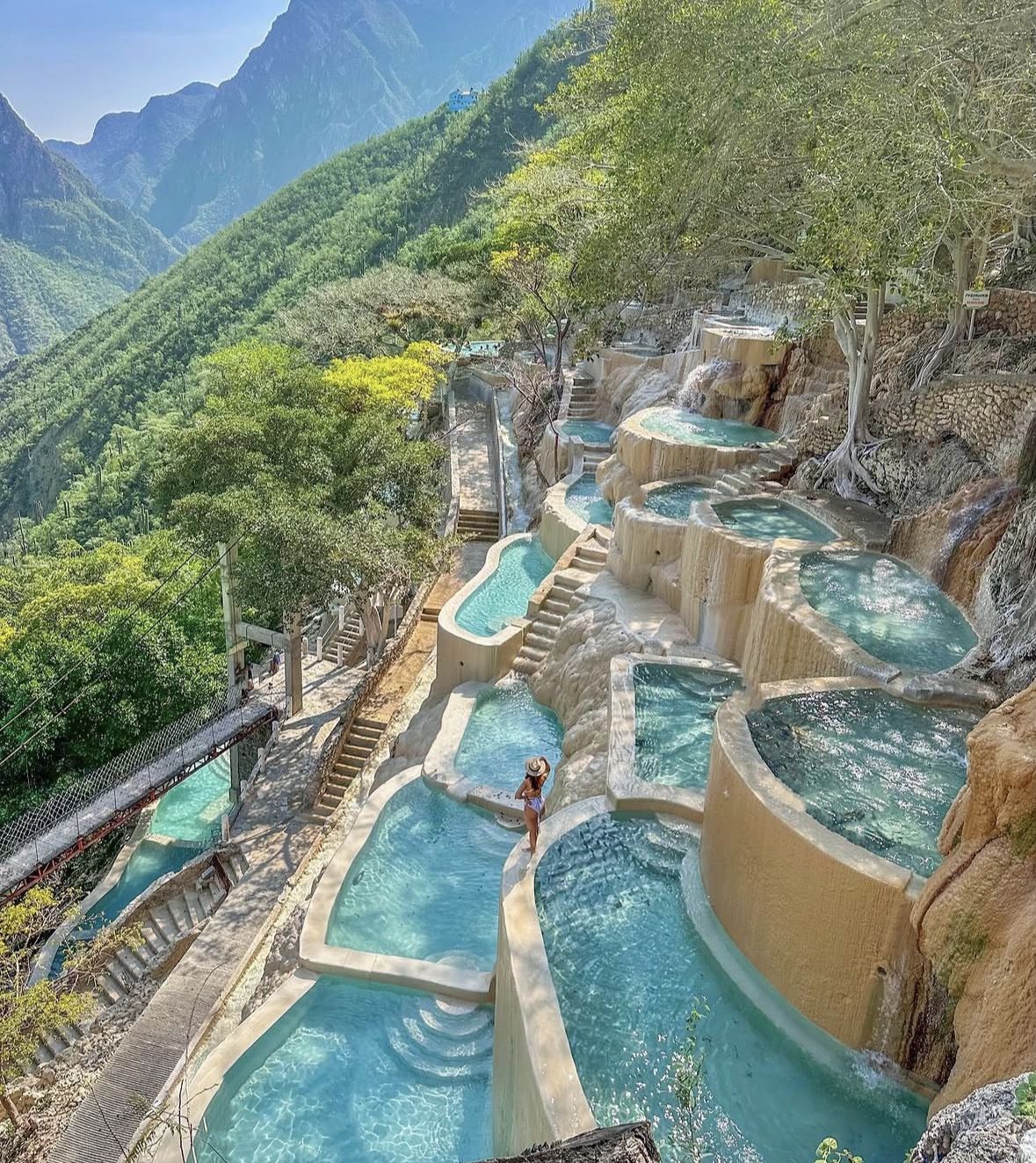
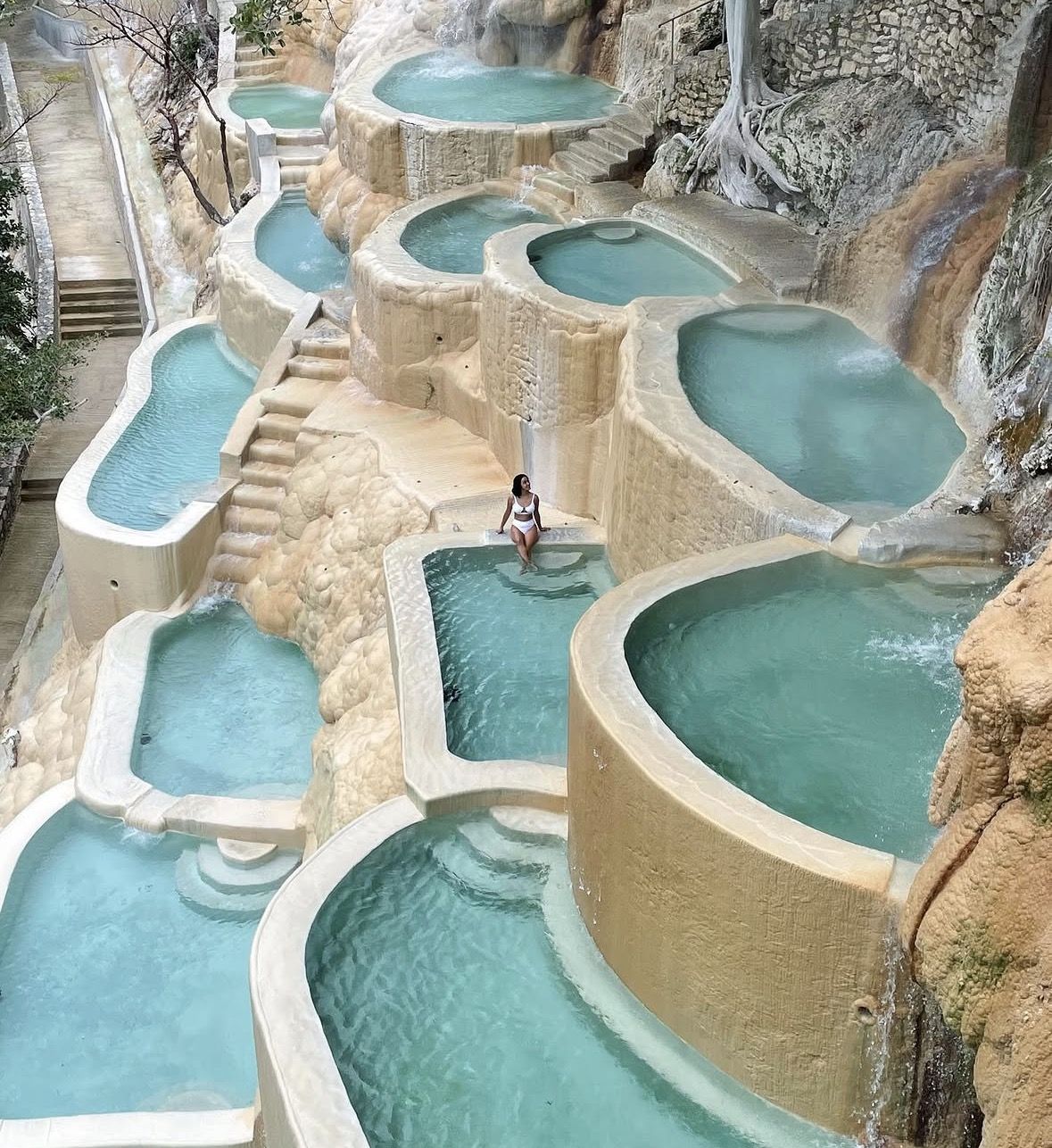
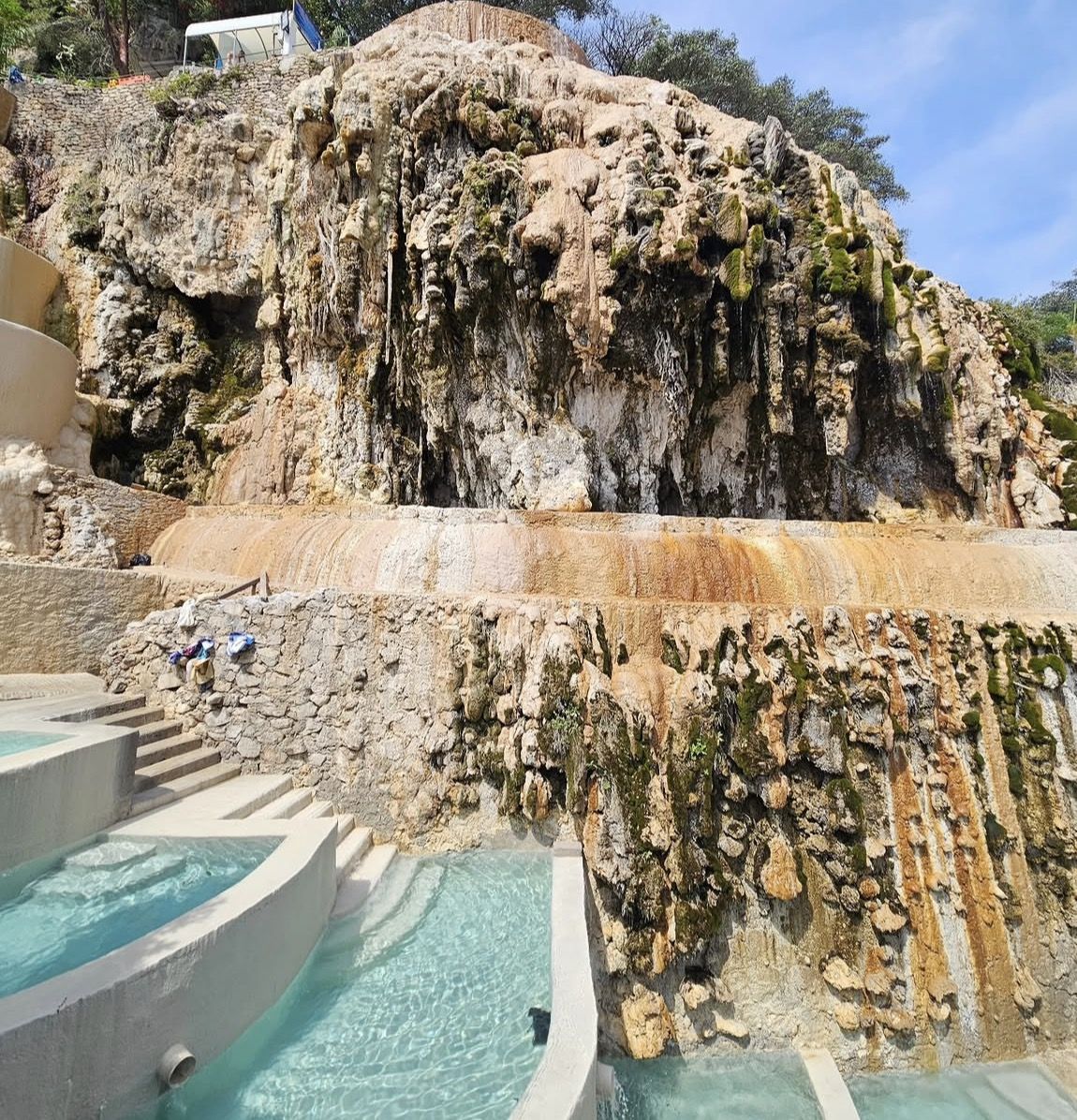
Tolantongo's extraordinary landscape is the product of volcanic geology unique to this part of the Trans-Mexican Volcanic Belt. Rainwater and groundwater percolate deep into the earth, where geothermal heat warms them before they rise again through limestone and travertine formations. The result is a system of thermal springs that emerge at temperatures ranging from approximately 35°C to 40°C (95°F to 104°F), carving mineral-rich pools and cascades into the canyon walls. Over millennia, dissolved calcium carbonate has precipitated out of the water to form the striking white and gold travertine terraces that frame Tolantongo's famous grottos and river channels.
The Hñähñu communities of Hidalgo maintained stewardship over the Tolantongo canyon long after Spanish colonizers arrived in the sixteenth century. While the broader Mezquital Valley was subjected to forced labor systems under the encomienda and later hacienda economies, the rugged terrain around Tolantongo provided a degree of insulation. The valley's Hñähñu inhabitants became known for their resilience and adaptability, developing intricate systems of water management, agave cultivation, and trade. This deep relationship with the land — including its thermal waters — remained a defining cultural thread even through centuries of colonial pressure and post-independence upheaval.
The ejido system introduced after the Mexican Revolution of 1910–1920 proved transformative for communities near Tolantongo. Under agrarian reform policies championed by figures like Emiliano Zapata, communal land ownership was legally enshrined for indigenous and rural communities. The thermal springs and surrounding canyon lands were placed under the collective management of the local ejido, specifically the community of San Cristóbal Tolantongo. This arrangement gave the community direct control over the site's future and laid the institutional groundwork for the community-run tourism model that would eventually make Tolantongo world-famous while keeping economic benefits local.
The formal development of Tolantongo as a visitor destination began gradually during the 1970s, when the ejido of San Cristóbal Tolantongo recognized the site's potential to generate sustainable income for the community. Early infrastructure was modest — basic pools, rudimentary paths, and simple accommodations — but the natural spectacle needed little embellishment. Word spread slowly at first through Mexican domestic tourism networks, particularly among travelers from Mexico City and Pachuca, the state capital of Hidalgo located roughly two hours away. The site attracted visitors curious about the cave-like grottos, the luminous turquoise river, and the therapeutic warmth of the spring-fed pools carved into the canyon.
Through the 1980s and 1990s, the ejido invested incrementally in improving access and facilities while deliberately maintaining community ownership of all operations. Unlike many natural wonders in developing countries, Tolantongo was never privatized or handed to outside hotel chains. Cabins, restaurants, and pool expansions were funded through visitor fees and managed collectively. This model attracted attention from researchers and development organizations studying community-based ecotourism in Latin America. Tolantongo became a quiet but significant case study in how indigenous and rural communities could leverage natural assets without surrendering sovereignty over them — a model that remains its defining characteristic today.
The digital era dramatically accelerated Tolantongo's international profile. When photographs of the canyon's iridescent pools, steam-filled grottos, and cascading thermal waterfalls began circulating on social media platforms in the 2010s, global audiences encountered the site for the first time. Travel publications in the United States, Europe, and Asia began listing Tolantongo among Mexico's most spectacular hidden destinations. The ejido responded by expanding capacity thoughtfully, introducing timed entry systems, limiting daily visitor numbers, and reinvesting revenues into local infrastructure including schools and healthcare — demonstrating that community governance could scale alongside growing international demand.
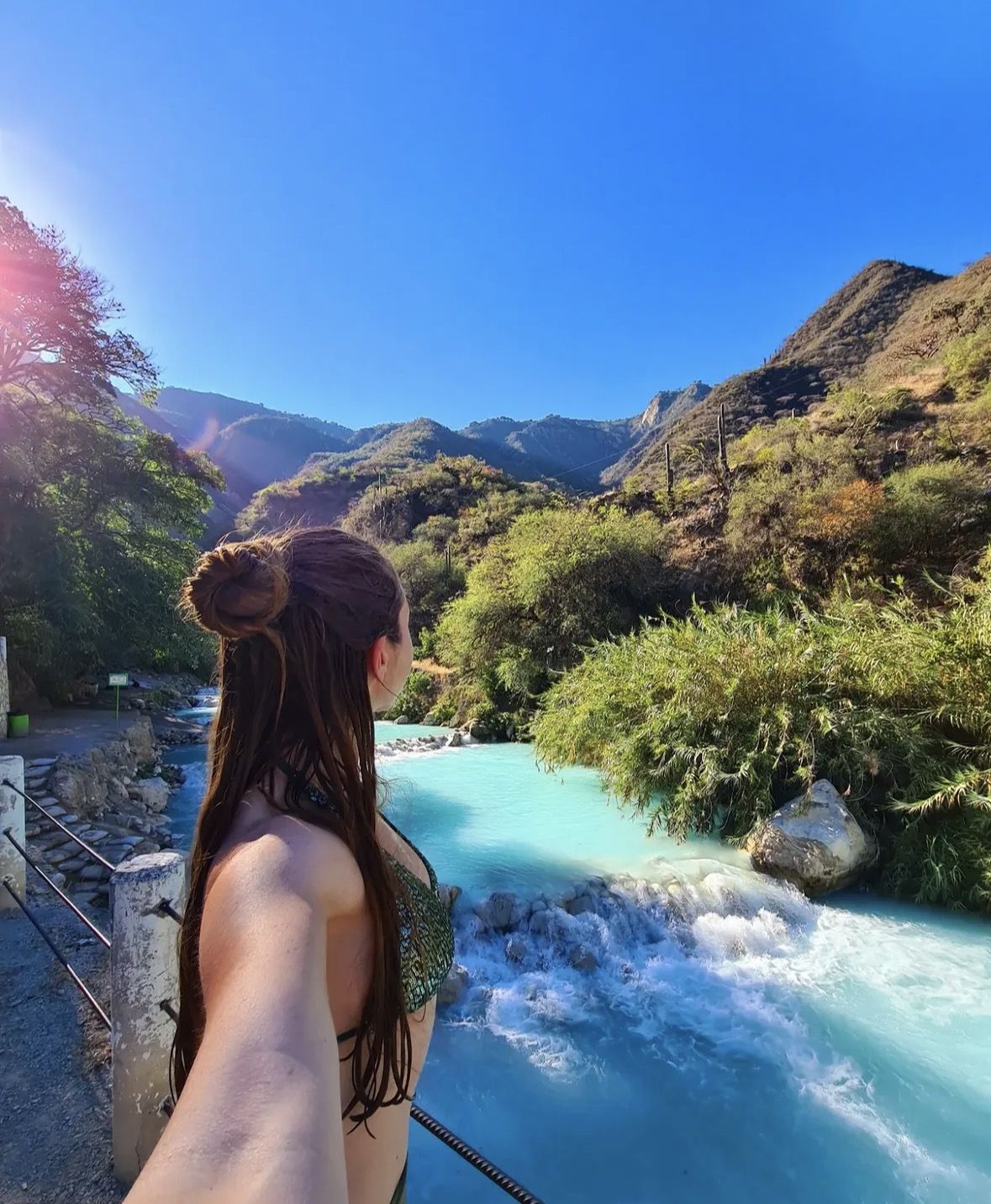
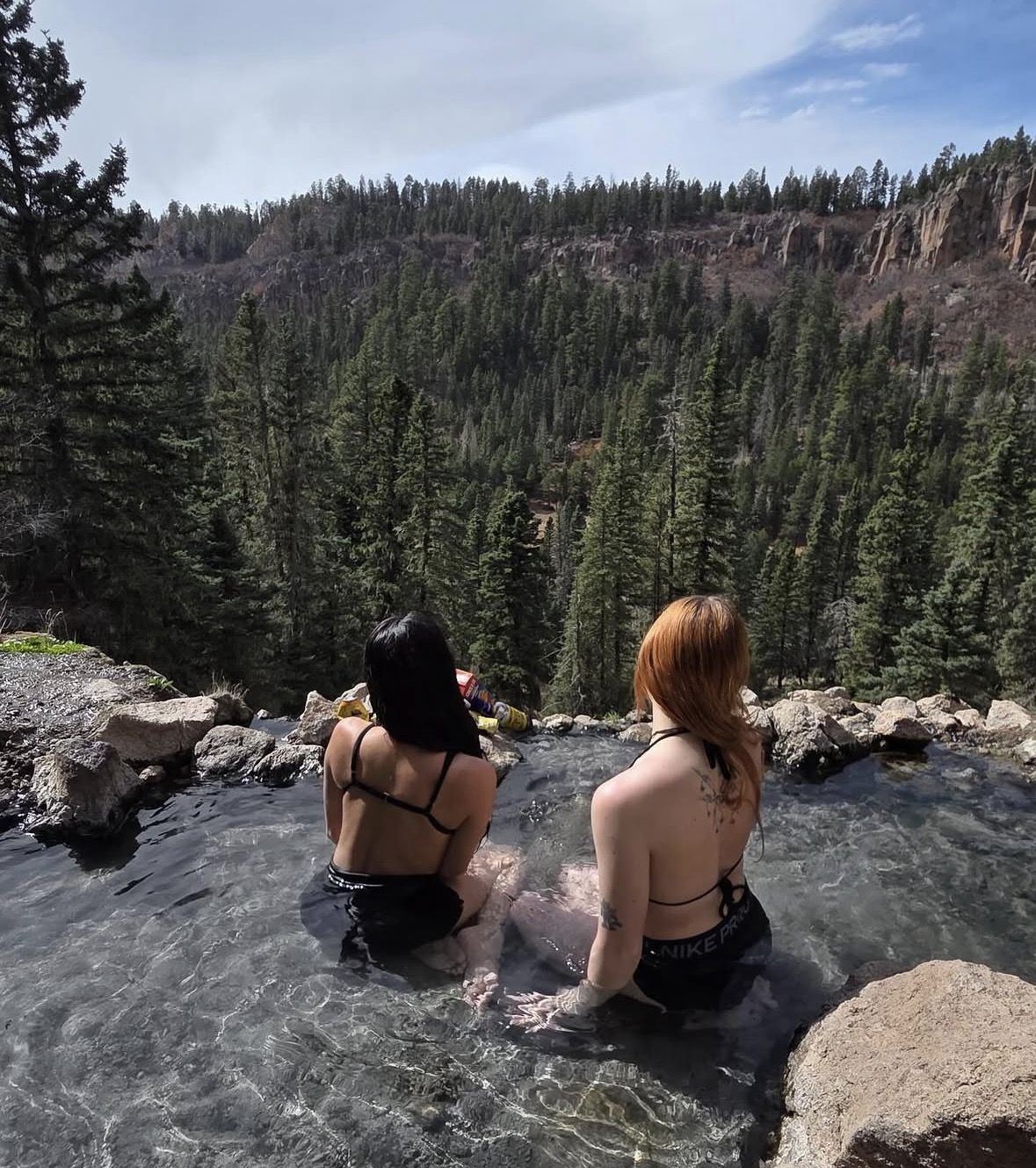
Visitors to Tolantongo today encounter a destination that wears its history lightly but carries it deeply. The ejido of San Cristóbal Tolantongo continues to operate every aspect of the site, from ticket booths and cabins to restaurants serving traditional Hidalgo cuisine. The famous grottos — naturally formed thermal caves where warm mineral water flows through limestone tunnels — remain the centerpiece experience, drawing visitors who wade through turquoise currents under dripping canyon walls. Above the river, tiered pools step down the cliff face, each fed by natural springs and offering sweeping views of the gorge. On clear mornings, steam rises from the water in columns visible from the canyon rim.
Tolantongo represents something increasingly rare in global tourism: a place of profound natural beauty that remains in the hands of the people who have always called it home. The Hñähñu heritage, the revolutionary land reform legacy, and the community's decades of careful stewardship have produced a destination unlike anywhere else in Mexico. Whether you come to soak in mineral-rich waters that indigenous people once considered sacred, to photograph the otherworldly turquoise grottos, or simply to experience a canyon that seems invented by imagination, Tolantongo rewards every traveler. This is not merely a hot spring — it is a living chapter of Mexican history, and it is waiting for you.
Ready to Experience It Yourself?
Thousands of years of thermal wonder are ready to be explored — and the best way to experience Tolantongo is with a guided tour that handles all the logistics for you. Browse our handpicked tours departing from Mexico City and Pachuca, complete with transportation, entry fees, and expert local guides. Secure your spot today, because spaces fill fast and this is one destination that deserves your full, unhurried attention.
Book Your Tour Now