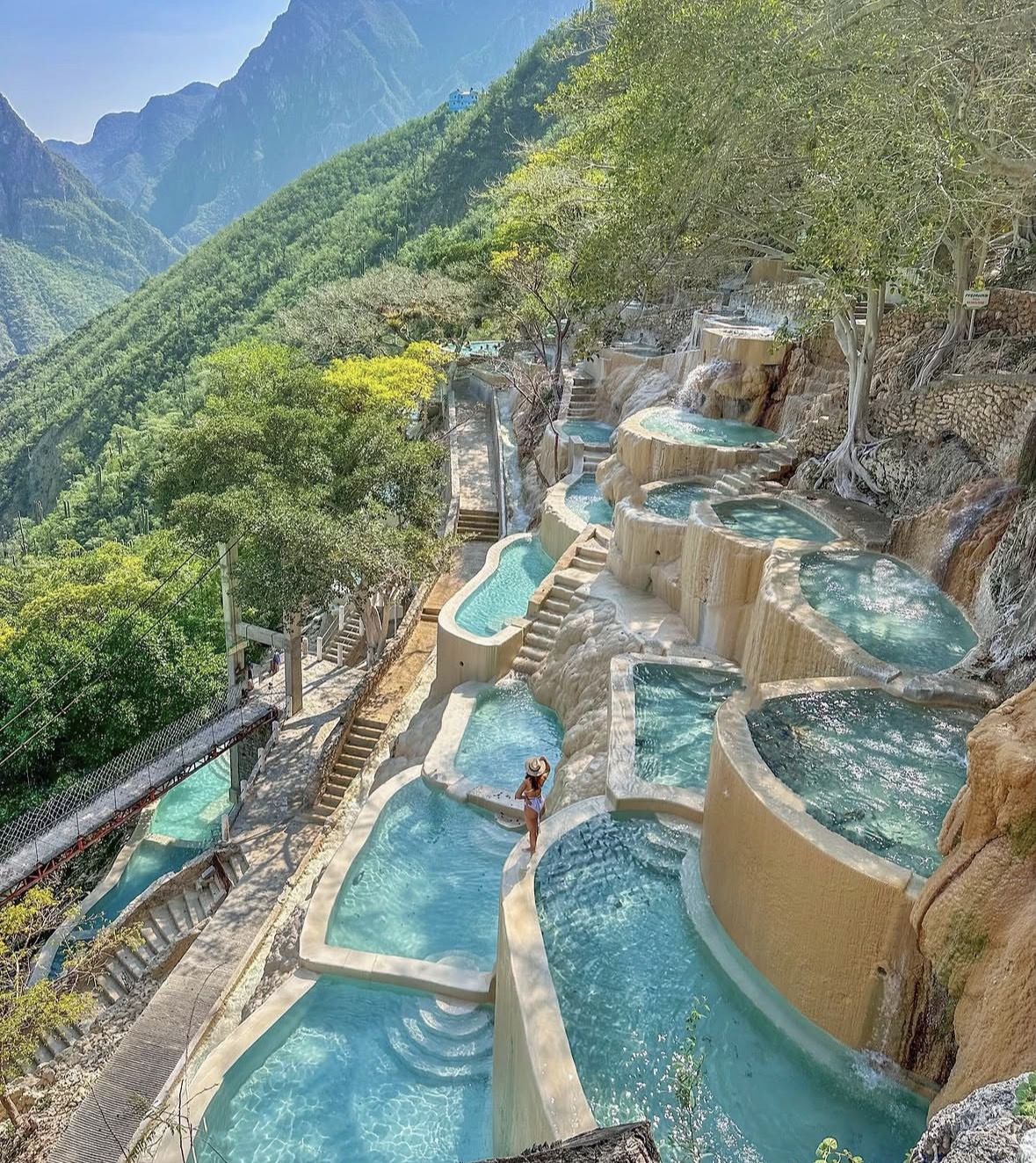
In shortTolantongo is in San Cristóbal, Municipio de Cardonal, state of Hidalgo, central Mexico, postal code 42370. The resort sits at 1,280 metres above sea level on the floor of a box canyon whose walls rise up to 500 metres. By road it is 201 km and about 3 hours 50 minutes from Mexico City; Ixmiquilpan, the nearest town, is 42.9 km away.
Cardonal, Hidalgomunicipality and state
1,280 maltitude on the canyon floor
500 mcanyon walls above the water
201 kmby road from Mexico City
The exact address
One address covers the entrance and the ticket booth: San Cristóbal, Municipio de Cardonal, Hidalgo, México, C.P. 42370. San Cristóbal is the village that owns the land, Cardonal the municipality, and Hidalgo the state directly north of the State of Mexico and north-east of Querétaro.
Tolantongo Hidalgo is not a town you can book a hotel in and walk around. The grottoes, the thermal river and the terrace pools sit on one piece of ejido land, worked by the Sociedad Cooperativa Ejidal 'Grutas Tolantongo': 112 families holding roughly 5,200 hectares, of which only about 40 hectares are open to visitors. Beyond the gate and the parking area there is farmland and canyon wall.
The address also hides the fact that there are two separately run parks in the same canyon. Grutas Tolantongo belongs to the San Cristóbal ejido, while La Gloria Tolantongo is run by the neighbouring La Mesa ejido and sells its own admission: MXN 180 for adults, with the full rate charged from age 6, and access between 7:00 and 19:00. The two are not linked by the shuttle that circulates inside Grutas Tolantongo, which serves La Gruta, La Cadena, La Huerta, Rancho and Paraíso, and does not stop at La Gloria.
The Mezquital valley and the canyon floor
The region around it is the Valle del Mezquital, dry scrub between about 1,700 and 2,100 metres in the Trans-Mexican Volcanic Belt. Three overlapping aquifers lie beneath it, the deepest in Cretaceous limestone, and that is the reservoir feeding the thermal water.
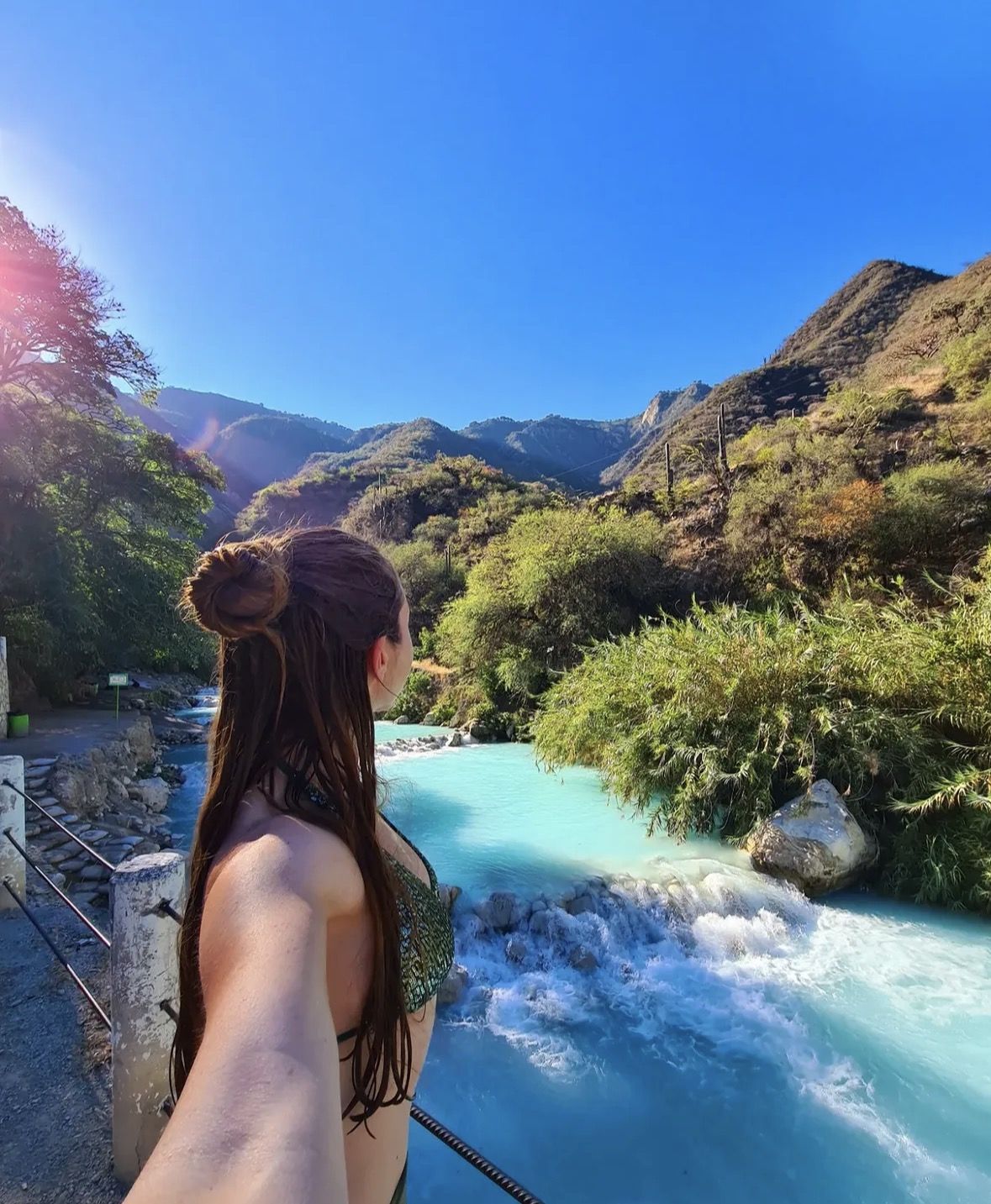
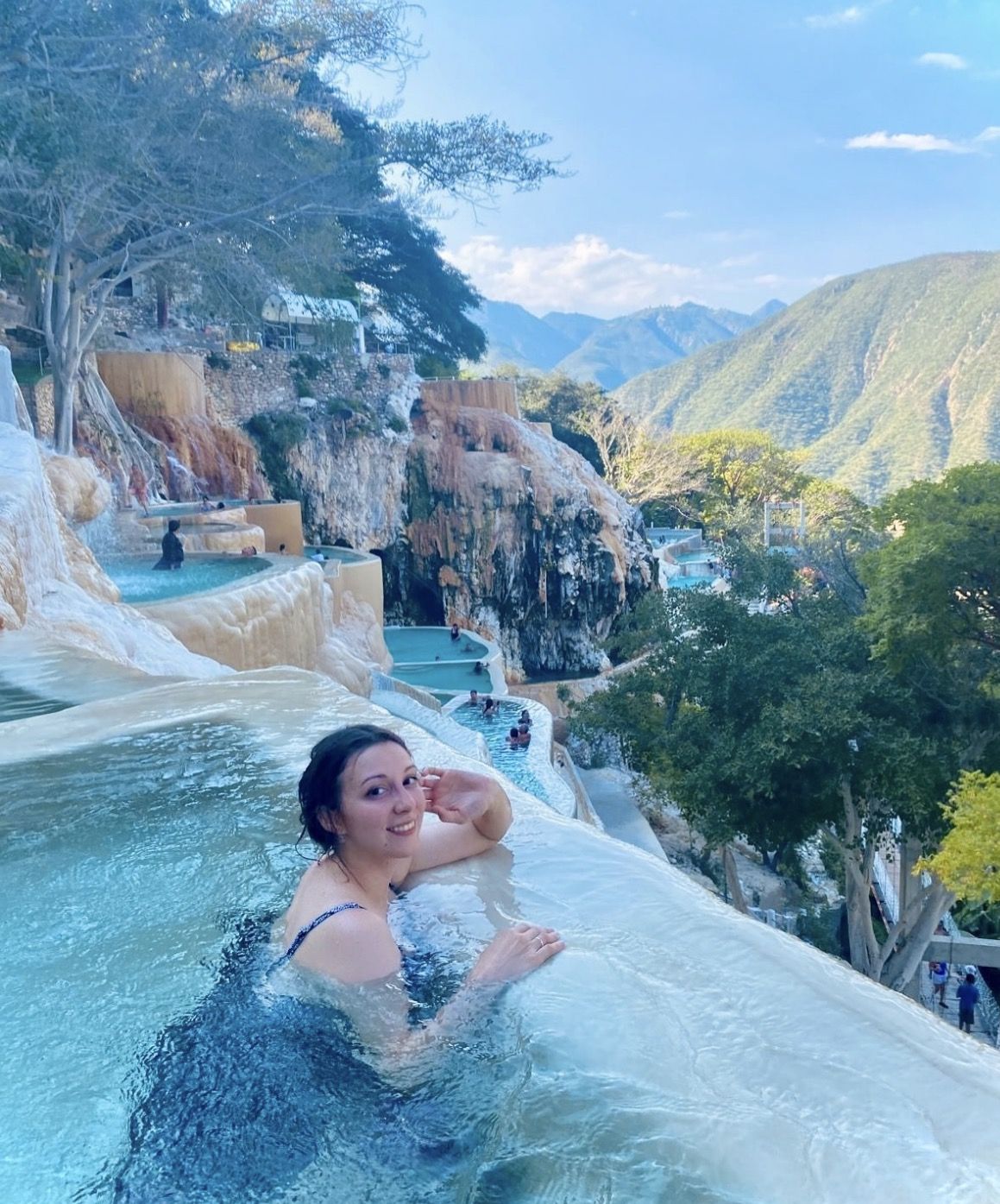
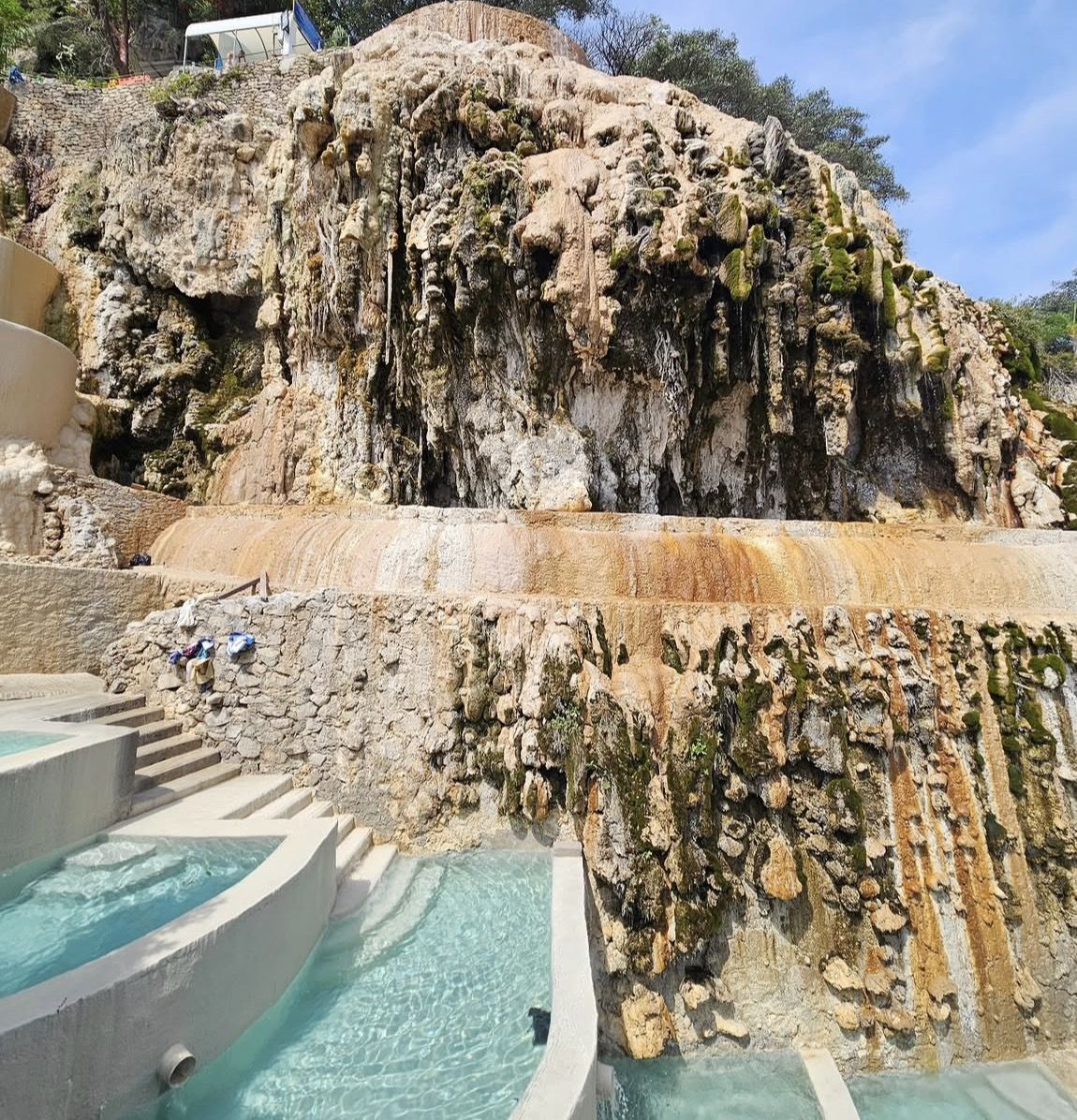
Tolantongo is a box canyon, a single closed valley with rock walls as much as 500 metres high and no through route out of the bottom. The Barranca de Tolantongo begins at roughly 2,300 metres north-west of Cardonal and falls to about 1,150 metres near Itztacapa, cut mainly into Upper Cretaceous limestone interbedded with shale. The pools and the grotto are at 1,280 metres above sea level, according to the park's own information page, and that altitude is why the air beside the water stays mild in January.
That drop in altitude is why the place feels sealed off while sitting in the middle of the country. You cross a flat, pale plateau with no hint of water anywhere, then lose a kilometre of height on a road that switchbacks down the side of the gorge, bend after bend, until the river shows up below you. Mobile reception, cash machines and fuel all stay up on the plateau.
Tolantongo location: road distances and driving times
The figures below come from the operator's own distance table, measured to the ticket booth. Read them as driving times with no stops; the final stretch is slower than the kilometre count suggests.
Querétaro is nearly as close as Mexico City in kilometres and quicker in hours, which is why a departure runs from there. Pachuca, the state capital, is the shortest of the three.
| Starting point | Road distance | Driving time |
|---|
| Mexico City | 201 km | about 3 h 50 min |
|---|
| Querétaro | 193 km | about 3 h 6 min |
|---|
| Pachuca | 117 km | about 2 h 28 min |
|---|
| Huichapan | 94.9 km | about 1 h 54 min |
|---|
| Actopan | 82.4 km | about 1 h 49 min |
|---|
| Ixmiquilpan | 42.9 km | about 1 h 11 min |
|---|
Mexico City to the canyon and back in one day
With 201 km and about 3 hours 50 minutes of road each way, this 14 to 16 hour day from $134 takes on the driving, the pre-dawn start and the kit. You pick which pool to sit in first.
★ 4.8/5 · 1,569 reviews
From Ixmiquilpan to the gate
Ixmiquilpan is the nearest service town and the staging post for everything. It has the last cash machines on the route, and since every payment inside the park is made in cash, from tickets and rooms to the restaurant, the shop and the lockers, this is where visitors draw money. The closest machine to the canyon is an hour behind you.
The route the park publishes runs on the México–Pachuca highway, then the Actopan–Ixmiquilpan road into Ixmiquilpan, where you turn right onto the Libramiento a Cardonal. From there the operator times the remaining 42.9 km at 1 hour 11 minutes, which is not pessimistic: the road climbs through Cardonal, then drops steeply into the barranca on tight bends. After dark, in rain, or with a driver who dislikes mountain roads, allow more. The park still sends visitors this way.
Ignore the Santiago de Anaya–El Cardonal shortcut you may read about online. The most recent primary reporting, from January 2026, found it still unfinished, with sections in poor condition and no completion date announced.
No airport, and no bus to the gate
There is no airport near the canyon and no long-distance bus that reaches the entrance. Public transport stops in Ixmiquilpan. From Mexico City the park points to OVNIBUS or FLECHA ROJA from gates 7 and 8 of the Central del Norte terminal; from Pachuca's Central de Autobuses 'Carlos Martínez Balmori' the PAI, AVM and CONEXION lines run the route, quoted at about 1 hour 38 minutes direct for MXN 42 to 61 one way, with Conexión listing roughly 18 departures between 05:15 and 19:15.
The last 42.9 km are covered by the cooperative's external shuttle, or by a collective microbus, from the parking area beside the San Antonio church in north Ixmiquilpan. The official English page puts the fare at MXN 80 per person per trip, with departures Monday to Thursday at 09:30, 11:30, 13:30, 15:30 and 17:30, and hourly from 09:30 to 17:30 Friday to Sunday. Returns from Tolantongo are listed at 7:30, 11:30, 13:30, 15:30 and 17:30. The park's Spanish and English pages do not give identical timetables, so confirm the departure on the day you travel.
A second shuttle links Molanguito, 8 km from the park, at MXN 30 per person, running 06:00 to 22:00 Monday to Thursday and 05:00 to 23:00 Friday to Sunday. With the last shuttle back at 17:30, a bus trip from Mexico City only works if you sleep in Ixmiquilpan or inside the park.
The simplest way to reach the canyon
Starting from Mexico City without a car, a round-trip tour is the one option that gets you into the water and back the same day. The drive is about 3 hours 50 minutes each way on the operator's figures, so departures leave in the dark and the itineraries run 13 to 16 hours door to door.
Three fit most readers of this page. The Full-Day Tour Exploring the Waters of Tolantongo runs 14 to 16 hours from $134, rated 4.8 from 1,569 reviews, with private air-conditioned transport and a loan kit that covers the headlamp, towel and waterproof phone case the grotto and the terraces call for. The Early & Express Tolantongo Hot Springs is 13 hours from $137, rated 4.9 from 679 reviews, park tickets included, with a 4:30 am meeting time that puts you on the cliff pools before the day fills. The Tolantongo Caves Hot Springs & Waterfalls Small Group Tour runs 14 hours from $132, rated 4.6 from 351 reviews, meets downtown at 5:30 am and includes a professional guide and entrance to the caves.
From Querétaro or the Bajío, the departure from there is 10 hours. If you already have a vehicle and are staying in Ixmiquilpan or Pachuca, the drive is short enough to run on your own schedule, and our pages on getting there from each city set out the routes, the terminals and the timings. Every tour listed here is operated by a licensed operator, with a full refund if you cancel at least 24 hours before departure.
- From Mexico City: 201 km, about 3 h 50 min each way, which is why tours start before dawn
- From Querétaro: 193 km, about 3 h 6 min, with a 10-hour departure available
- From Pachuca: 117 km, about 2 h 28 min, plus buses on to Ixmiquilpan
- From Ixmiquilpan: 42.9 km, about 1 h 11 min by car or on the cooperative's shuttle
Questions people ask
Which city should I base myself in to visit Tolantongo?
Mexico City works if you take a round-trip tour, since the departure absorbs the 201 km each way. If you are driving and want a short approach, Pachuca is 117 km and about 2 hours 28 minutes out, and Ixmiquilpan is 42.9 km and about 1 hour 11 minutes from the gate. Ixmiquilpan also has the only cash machines nearby.
Can I combine Tolantongo with the Basaltic Prisms on the same day?
No. The Prismas Basálticos at Santa María Regla are 111 km and about 2 hours 31 minutes from Grutas de Tolantongo, each at the end of its own mountain road. Give them separate days. From Mexico City the Prismas are about 120 km and roughly 1 hour 42 minutes, which makes an easier standalone trip.
Does the remote location mean the park closes for part of the year?
No. The park runs every day of the year, holidays included, 7 am to 8 pm. What the canyon setting does change is the water: rain falling on the high ground above Cardonal drains into one narrow gorge and can lift the river fast, which is why the park names mid-June to mid-July as its rainy stretch and tells campers to keep their tents away from the riverbank in that window.
How much cash should I have on me before the descent?
Enough for the whole visit. Cards are not accepted anywhere inside the park, including the restaurants, hotels, shop and ticket booth, and the nearest machine is back in Ixmiquilpan, an hour away by road. Draw pesos in small notes before you turn onto the Libramiento a Cardonal, and leave room for deposits, which are also paid in cash.
Is Tolantongo in Hidalgo or in the State of Mexico?
Hidalgo. The published address is San Cristóbal, Municipio de Cardonal, Hidalgo, postal code 42370, in the Valle del Mezquital in the north-west of the state. The confusion comes from the drive, which starts on the México–Pachuca highway and crosses the State of Mexico before entering Hidalgo.
Read also